
REVIEW · COMMUNISM AND CEAUSESCU TOURS
Private Bucharest Communist Tour with the People’s House and Ceausescu Residence
The past is impossible to miss here. This private Bucharest Communist Tour connects the Palace of Parliament with Ceausescu’s private home, then adds city sights and personal stories that make the era easier to understand. I especially like the hotel pickup and private vehicle, since Bucharest’s major communist landmarks are spread out. I also like that guides such as Mihai, Marcel, Bogdan, Nicole, and Alexandra have brought family memories, old photographs, and clear explanations into the day.
The main drawback is the price: $261.65 per person is a serious outlay, especially for a solo visitor. Lunch costs extra, photography at the Palace of Parliament costs extra, and the tour can last six to eight hours. Still, for a private group that wants history explained without wrestling with city transport, the cost may be fair.
In This Review
- Key points about this Bucharest communist tour
- Why Bucharest’s communist past needs a full day
- Entering the Palace of Parliament after Ceausescu’s grand plan
- Spring Palace and the Ceausescus’ private luxury
- Spark House, restricted neighborhoods, and the machinery of control
- Lunch in an old-style Bucharest setting
- A wider look at Bucharest beyond communist monuments
- What the six to eight hours feel like
- Is $261.65 per person good value?
- The guides make or break a history tour
- Who should book this Bucharest tour?
- Should you book it?
- FAQ
- How long does the Bucharest Communist Tour last?
- What time does the tour start?
- Does the tour pick me up at my hotel?
- Is transportation included?
- Which admissions are included?
- Is lunch included in the tour price?
- Is photography included at the Palace of Parliament?
- What is the cancellation policy?
Key points about this Bucharest communist tour
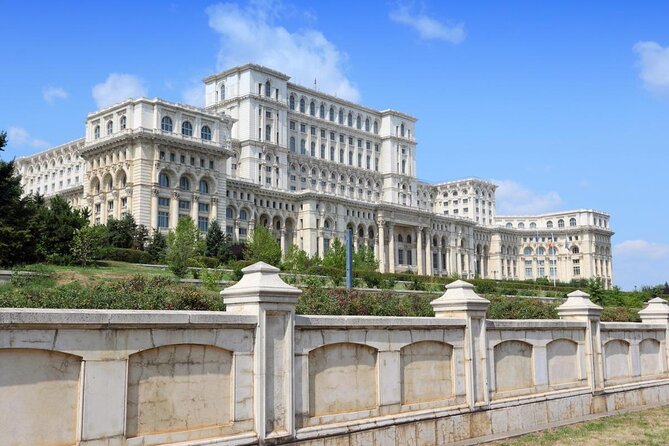
- The Palace of Parliament is the day’s architectural heavyweight, with admission included and about one hour inside.
- Spring Palace reveals the Ceausescus’ private world, a striking contrast to the shortages faced by ordinary Romanians.
- Hotel pickup and drop-off keep the day simple, with private transportation between major sites.
- Guides add human detail, including old photographs, family memories, and explanations of the 1989 collapse.
- The tour can include more than the two headline sights, such as Spark House, the former communist press headquarters, the Ceausescu neighborhood, a memorial museum, and Bucharest’s historic center.
- This is best for history and politics fans, especially those who prefer a private pace and plenty of conversation.
Why Bucharest’s communist past needs a full day
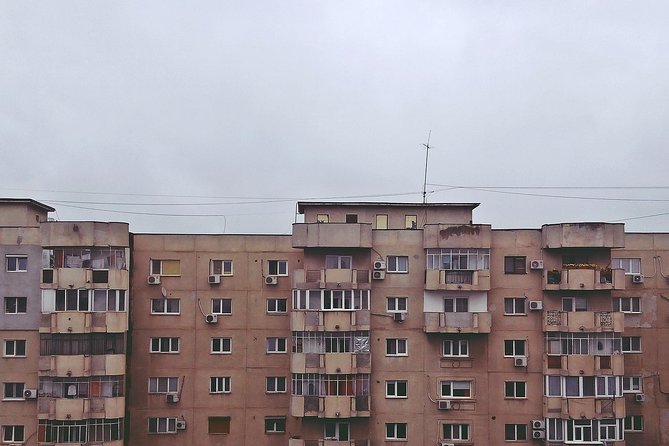
Bucharest’s communist story is not confined to one museum. It appears in enormous government buildings, broad avenues, private residences, former party offices, memorials, and ordinary neighborhoods. That makes a guided tour useful. You get the places, but you also get the links between them.
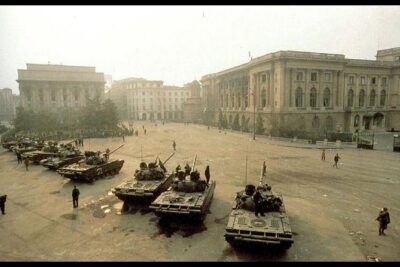
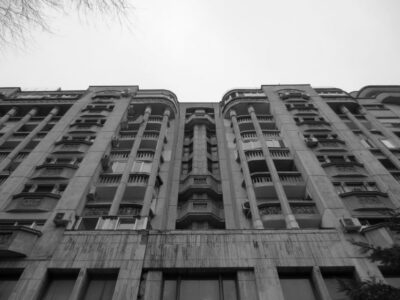
Nicolae Ceausescu ruled Romania from 1965 until his execution in December 1989. His government combined strict political control with a grand architectural vision. The capital was reshaped to project state power, often at great human and financial cost.
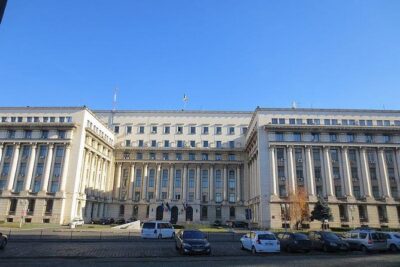
I like the way this tour places official grandeur beside private luxury. The Palace of Parliament tells you how the regime wanted to be seen. Spring Palace shows how the ruling couple lived. The gap between those two worlds is the heart of the experience.
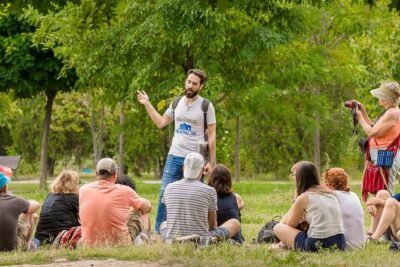
The day begins at 10:00 a.m. with pickup in front of your Bucharest hotel. Since only your group participates, you can ask questions, pause for clarification, and tell your guide what interests you most. That is a better setup than a large coach tour when the subject is complicated and politically sensitive.
The tour is offered in English, though the guide may be multilingual. The guide names associated with the experience include Mihai, Marcel, Bogdan, Nicole, Ciprian, Alexandra, and Claudia. Their strengths vary, but the most praised qualities are clear explanations, warmth, and the ability to connect national events with personal experience.
More communism history tours:
- The Real tour of Communism
★ 5.0 · 666 reviews - Life under Communism
★ 5.0 · 358 reviews - 3-Hour Guided Tour of Communist Bucharest
★ 4.9 · 303 reviews
Entering the Palace of Parliament after Ceausescu’s grand plan
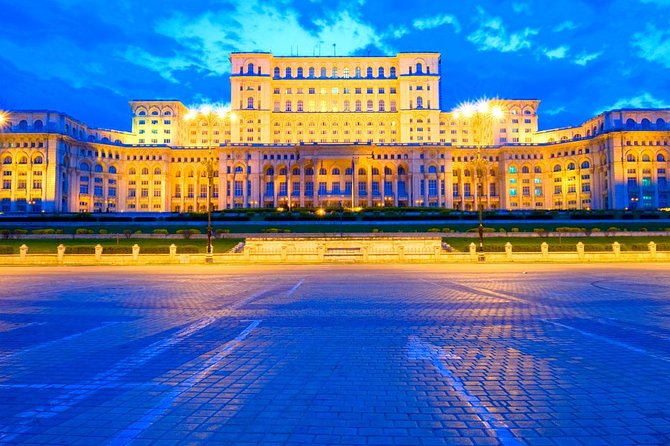
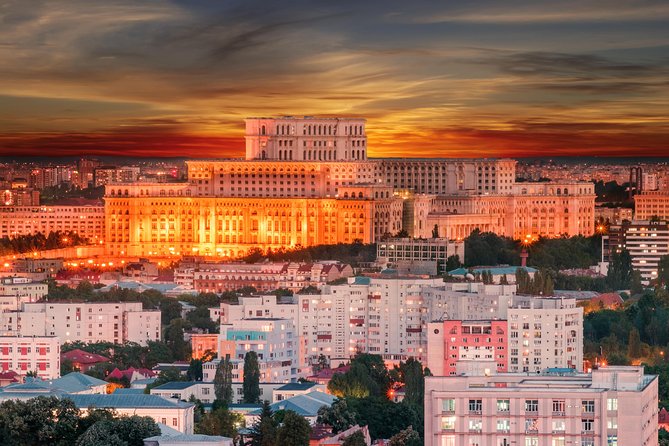
The Palace of Parliament is the largest stop and the building that gives the tour its visual punch. It was originally called the House of the Republic and later became known as the House of the People. Construction began in 1984 and continued until 1997, long after Ceausescu’s fall.
The figures are hard to grasp until you are in front of it. The building measures about 240 meters long, 270 meters wide, and 84 meters high. It holds a Guinness World Record as the largest administrative building in the world, and it is often described as the second-largest administrative building overall, depending on the comparison being used.
You should expect about one hour here, with admission included. The visit is as much about scale as decoration. Vast rooms and formal interiors were designed to express authority, permanence, and national power.
The guide’s explanation matters because the building can otherwise become a parade of large rooms. Ask how the project affected the surrounding city and what its construction represented for ordinary people. The tour’s wider political context helps keep the architecture from becoming mere spectacle.
A practical point: photography requires a separate fee at the Palace of Parliament. If taking pictures is important to you, budget for it before arrival. Admission is included, but this extra charge is not.
The Palace is also a place where the private format helps. Your guide can explain details in plain language rather than rushing through a standard script. One guide, Claudia, was praised for making both the Palace and Spring Palace interesting to visitors who also enjoy architecture.
Spring Palace and the Ceausescus’ private luxury
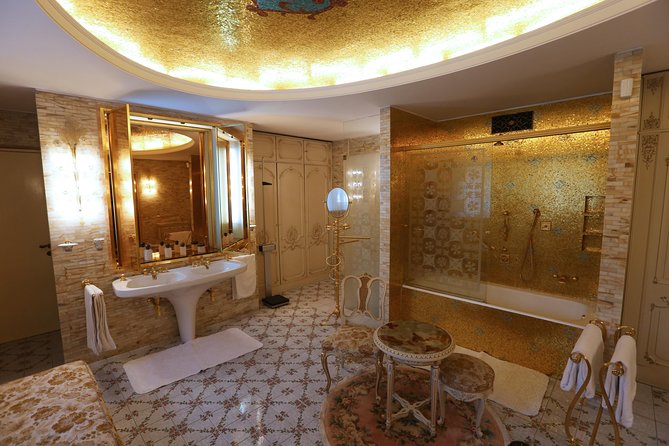
Spring Palace, also called the Ceausescu Residential Palace, offers a very different view of the regime. This was the home of Nicolae and Elena Ceausescu from 1965 until their deaths in 1989.
The estate was built between 1964 and 1965. After the communist regime fell, it served as a VIP residence for official delegations and foreign presidents. In 2016, it opened as a museum.
This is the stop that turns political history into something personal. At the Palace of Parliament, you see the public face of power. At Spring Palace, you see the comforts reserved for the ruling family. The contrast can feel jarring, and that is exactly why the visit works.
You might find the residence fascinating for its interiors and unsettling for what it represents. The luxury is not presented as a neutral design choice. It sits against the backdrop of Romanian austerity, shortages, surveillance, and political repression.
The scheduled visit lasts about one hour, with admission included. Afterward, your guide returns you to your hotel. The residence is especially valuable if you want to understand why the 1989 uprising carried such force. A guide can explain how the Ceausescus’ lifestyle fitted into the wider system rather than leaving you with only a collection of lavish rooms.
Spark House, restricted neighborhoods, and the machinery of control
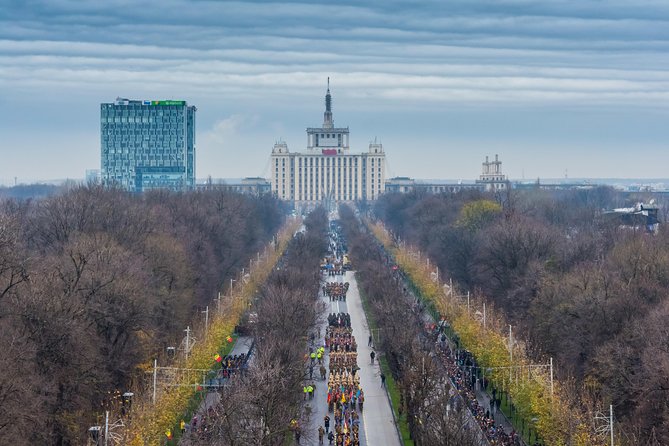
The tour’s highlights also include Spark House, formerly the headquarters of the Central Communist Press. Its name refers to the Romanian communist newspaper Scanteia, and the building reflects the role of state-controlled media.
This stop adds an important piece to the story. Government buildings show political power, but newspapers and press offices show how the regime shaped public information. A visit here helps you see that communism was maintained not only through grand construction, but also through control of what people could read and hear.
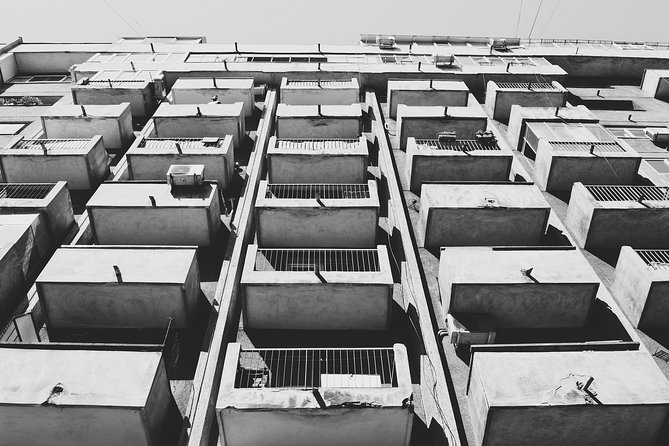
You also travel through the once-inaccessible neighborhood associated with Ceausescu and his family. This gives you a sense of how the ruling circle separated itself from much of the city. The tour does not treat the neighborhood as a simple curiosity. It fits into the larger question of privilege, security, and distance from everyday Romanian life.
The route may also include a memorial museum dedicated to political prisoners and other victims of the regime. This is an essential counterweight to the grand buildings. Without it, the tour could lean too heavily toward architecture and the Ceausescu household.
The exact order of these sights can vary, so you should think of the day as a guided route through communist Bucharest rather than a rigid checklist. The private format gives the guide room to adjust the pace and explain what you are seeing.
A few more Bucharest days worth comparing
- Bucharest: Dracula’s Castle, Peles Castle, & Brasov Old Town
★ 4.5 · 17,858 reviews - Bucharest: Dracula Castle, Peles Castle & Brasov Old Town
★ 4.6 · 10,891 reviews - Bucharest: Dracula’s Castle, Peleș Castle & Brașov Day Trip
★ 4.5 · 5,919 reviews - Bucharest: Palace of Parliament Tickets and Guide
★ 4.3 · 3,182 reviews
Lunch in an old-style Bucharest setting
Lunch is not included, but the tour includes a stop at a local restaurant that retains the atmosphere of Soviet-era Bucharest. The expected cost is about €13 per person.
That price is reasonable for a meal, but the value is in the setting as much as the food. After several hours of political history, a local restaurant gives you a break and another way to understand the city. It is not a museum display. It is part of ordinary Bucharest life.
One guide took the group to a restaurant with good food, a pleasant atmosphere, and a pretty view. Another guide combined the meal with time in the old city. You should ask your guide what is planned for lunch and whether you have a preference, since the meal is not part of the prepaid tour price.
Bring some Romanian lei or a payment method suitable for personal expenses. The tour description gives the approximate lunch cost, but individual spending is your responsibility.
A wider look at Bucharest beyond communist monuments
One of the strongest features of this experience is the chance to see more than the two ticketed attractions. The day can include a walking tour of Bucharest’s historic center, with opportunities to look inside several monasteries.
That addition matters because communist Bucharest is only one layer of the city. The older center provides a useful contrast: religious buildings, historic streets, and pre-communist architecture sit alongside the monumental projects of the dictatorship.
One guide also accompanied a group on the Bucharest Metro, helping them use the system. This was not presented as the central feature of every tour, so you should not assume it is guaranteed. Still, it shows the sort of personal help a private guide may provide when the route or your interests call for it.
The same guide helped a guest reach a local market and pharmacy when they felt unwell. That kind of assistance is not a formal inclusion, but it shows the practical value of having a local person with you. You are not simply following a flag through the city. You have someone who can translate and help solve small problems.
What the six to eight hours feel like
The tour lasts about six to eight hours, starting at 10:00 a.m. That is a long outing, but the subject needs time. You are moving between major sites, touring two large residences, eating lunch, and possibly walking through the historic center or visiting additional communist-era locations.
Private transportation is included, along with hotel pickup and drop-off. This is valuable in Bucharest because the sights are not all gathered in one compact district. You avoid arranging taxis, learning several routes, or returning to your hotel between visits.
The pace should suit you if you enjoy conversation and explanation. It may be less appealing if you want a quick photo tour with little commentary. The tour is designed for people who want to ask why things happened, not only where to take a picture.
Wear comfortable shoes. Even though transportation is provided, you may walk at the Palace, Spring Palace, the historic center, and other stops. The tour is available to most people, but the minimum age is 12, and children must be accompanied by an adult.
Is $261.65 per person good value?
At $261.65 per person, this is not a budget excursion. The price makes the most sense for couples, families, or small groups who want a private guide and a vehicle for the day.
The cost includes:
- English-speaking professional guide
- Hotel pickup and drop-off
- Private transportation
- Entrance to the Palace of Parliament
- Entrance to Spring Palace
You still pay separately for lunch, personal expenses, and the Palace photography fee. Those extras are not large compared with the tour price, but you should include them in your planning.
The value comes from convenience and interpretation. You are paying to have the city’s communist story organized into one day, with transportation handled and a guide available for questions. If you are traveling alone, the per-person price is harder to justify. If you are splitting the experience among a private group, it becomes more appealing.
The perfect score from 22 ratings is encouraging, especially because the praise is specific. Guides were singled out for detailed explanations, good timing, old photographs, personal family stories, and a relaxed manner. Those qualities matter more than a generic promise of sightseeing.
The guides make or break a history tour
A communist history tour can become dry very quickly. The best guide has to explain political events, architecture, propaganda, and daily life without turning the day into a lecture.
Nicole used old photographs and family experiences to make the places easier to picture. Marcel was praised for detailed explanations and a well-planned route. Bogdan helped explain Romania’s national challenges in a way that made a complicated story easier to follow.
Ciprian was described as dynamic and clear. Alexandra brought humor and a relaxed personal approach while combining the main Bucharest sights with lunch and a walk through the old city. Mihai was praised for his timing, kindness, and ability to keep the day comfortable.
You may not receive the same guide, and the tour may be operated by a multilingual guide. Still, the consistent strength of the experience is the human explanation. If you want a highly academic lecture or a specialist architectural study, ask questions before booking. If you want a friendly guide who can connect history with the city around you, this format fits well.
Who should book this Bucharest tour?
I would recommend it most strongly to:
- History and politics enthusiasts
- Visitors with only one full day for Bucharest
- Couples and families who prefer a private outing
- Architecture fans interested in monumental state buildings
- People who want hotel pickup and transportation included
- Visitors who want context for the 1989 fall of communism
You may want to skip it if your main goal is cheap sightseeing, nightlife, or a short introduction to Bucharest. The day is long, the topic is serious, and the price is high for a solo visitor.
Reservations need to be made at least 48 hours ahead. Confirmation arrives at booking, and free cancellation is available up to 24 hours before the 10:00 a.m. start time. If you cancel or change the booking less than 24 hours before departure, the payment is not refunded.
Should you book it?
Book this tour if you want Bucharest’s communist past explained through places, not just dates. The Palace of Parliament supplies the huge political symbol, Spring Palace supplies the private contrast, and the optional city additions help connect the dictatorship to everyday Bucharest.
I would book it for a private group with a genuine interest in history, especially if you value a guide who can use photographs, family memories, and clear storytelling. I would think twice as a solo visitor because of the $261.65 price. For the right group, though, the private transport, included admissions, hotel service, and strong guide-led interpretation can make this one of the most useful history days in Bucharest.
FAQ
How long does the Bucharest Communist Tour last?
The tour lasts approximately six to eight hours.
What time does the tour start?
Pickup and departure are at 10:00 a.m.
Does the tour pick me up at my hotel?
Yes. Pickup and drop-off are offered at any hotel in Bucharest, with pickup in front of the hotel.
Is transportation included?
Yes. Private transportation is included, and only your group participates.
Which admissions are included?
Admission to the Palace of Parliament and the Ceausescu Residence, also called Spring Palace, is included.
Is lunch included in the tour price?
No. Lunch is not included. The approximate cost is €13 per person.
Is photography included at the Palace of Parliament?
No. The Palace of Parliament photography fee is separate.
What is the cancellation policy?
You can cancel for a full refund up to 24 hours before the experience start time. Changes or cancellations made less than 24 hours before departure are not accepted for a refund.
Just added in Bucharest
- Bucharest: Dealu Mare Winery Private Trip with Wine Tasting★ 4.9 · 6 reviews
- Winery touring & private wine tasting – one day private tour★ 5.0 · 3 reviews
- Village Museum Bucharest Guided Tour★ 5.0 · 6 reviews
- Transylvania Tour: Dracula’s Castle, Peles Palace & Brasov★ 5.0 · 19 reviews
- Transfer Airport Otopeni – Bucharest★ 5.0 · 2 reviews
- Private Transfer Bucharest Otopeni Airport (OTP) to/from Brasov★ 5.0 · 2 reviews
- Bucharest Airport Transfer To Constanta Mamaia★ 5.0 · 3 reviews
- Airport Henri Coanda (Otopeni) to Bucharest – Private Transfer – Driver★ 5.0 · 5 reviews
Communism and Ceausescu Tours, compared.
Bucharest Essential Tour: Old Town, Calea Victoriei & Communism
Read our review →
Communism in Bucharest – Landmarks, Museum & Communist Appetizers
Read our review →
Browse the lists this tour appears in