
REVIEW · COMMUNISM AND CEAUSESCU TOURS
Private Walking Tour of Communist Bucharest
Communist Bucharest tells its story in stone. This private seven-hour outing links Revolution Square, Ceausescu’s former home, the enormous Palace of Parliament, and churches saved from demolition. I like the private format, which lets you ask questions and adjust the day, and I like the guides’ strong political and tourism background. The main drawback is cost: at $92.19 per person, you still pay separately for some admissions, lunch, and drinks.
The day also includes transport by private vehicle for parts of the route, which matters because the sights are spread across Bucharest. Hotel pickup is offered for groups of up to three people, but larger groups need to meet in Bucharest. Guides Laura and Diana receive especially warm praise for being friendly, helpful, and well prepared.
In This Review
- Key Points Before You Book
- Why Communist Bucharest Needs More Than a Quick Photo Stop
- University’s Square and the Shock of December 1989
- Revolution Square and the Collision of Two Eras
- The Romanian Athenaeum Adds Beauty to a Political Day
- Ceausescu’s Mansion Shows Power at Home
- Palace of Parliament: Monumental, Costly, and Hard to Ignore
- Constitution Square and the Communist Civic Center
- Antim and Mihai Voda: Churches That Survived Demolition
- The Guide, Transport, and Seven-Hour Pace
- Is $92.19 a Fair Price?
- Who Should Book This Bucharest Tour?
- My Booking Verdict
- FAQ
- How long does the Communist Bucharest tour last?
- What time does the tour start?
- Where does the tour begin?
- Where does the tour end?
- Is hotel pickup available?
- Is this a private tour?
- Is transportation included?
- Are meals included?
- Are entrance fees included?
- Do I need to bring a passport?
Key Points Before You Book
- Seven hours with a serious political focus: The tour follows the rise and fall of Romanian communism, not just a parade of grand buildings.
- A private guide changes the pace: You can customize the route and ask for more detail at the sites that interest you most.
- Ceausescu’s mansion adds a personal angle: The former dictator’s residence shows how the ruling family lived away from the monumental public buildings.
- Palace of Parliament entry costs extra: The building is included in the route, but the admission ticket is not part of the tour price.
- The route connects old and new Bucharest: Royal buildings, revolutionary memorial spaces, communist civic planning, and rescued churches all appear in one day.
- Guides are a major strength: Laura and Diana are praised for clear explanations, local knowledge, and a generous approach to guests.
Why Communist Bucharest Needs More Than a Quick Photo Stop
Bucharest can be confusing if you see its grand avenues and monumental buildings without context. The communist government reshaped entire sections of the city, while the violent events of December 1989 changed the country’s political direction. This tour gives you a way to connect those events to specific squares, buildings, and streets.
I like that the day does not focus only on Nicolae Ceausescu. You also see the royal past that communism tried to overshadow, public spaces linked to the 1989 uprising, and religious buildings that survived forced demolition. That wider frame helps you understand that Bucharest’s communist story is about power, architecture, public fear, resistance, and the survival of older traditions.
The private setting should suit you if you prefer conversation over a fixed script. The guide has degrees in political science and tourism, so you can expect more than dates and building names. At the same time, the tour lasts about seven hours, and the subject matter is serious. You should be ready for a full day of walking, driving, listening, and looking closely.
More Walking Tours in Bucharest
- Bucharest: City Highlights Guided Walking Tour
★ 4.9 · 1,482 reviews - Bucharest Highlights Walking Tour
★ 5.0 · 469 reviews - Bucharest: Ghost Stories & Romanian Mythology Walking Tour
★ 4.9 · 287 reviews
University’s Square and the Shock of December 1989
The tour begins at University’s Square, one of the memorial spaces connected with the violent events that brought down communism in December 1989. You spend about 30 minutes here, with no admission fee.
This is a useful opening because it places ordinary public space at the center of political change. The square is not simply a traffic junction or a convenient meeting point. It is tied to the street protests and conflict that marked the end of Ceausescu’s rule.
I would use this first stop to ask the guide for a clear timeline. The political story can become hard to follow if you only hear isolated facts. A private guide can explain how the square relates to the events at Revolution Square and how the fall of the regime unfolded.
There is no ticket cost, but you should not expect a formal indoor attraction here. Much of the value comes from the explanation, the location, and the ability to pause and consider what happened there. If you prefer museums and displays, this opening may feel spare. If you like places where public events shaped national life, it is a strong start.
Revolution Square and the Collision of Two Eras
About 30 minutes at Revolution Square brings the story into sharper focus. This place is linked directly with the December 1989 uprising, but it also contains reminders of two very different periods: Romania’s royal past and the communist dictatorship.
That contrast makes the square one of the most useful stops on the route. You are not looking at a single political monument. Instead, the surrounding buildings help show how one government used an existing capital and then tried to reshape its meaning.
The guide’s role matters here. A quick independent visit can leave you wondering which buildings relate to the monarchy, which belong to the communist period, and which are tied to the revolution. Laura’s clear explanations and Diana’s well received guiding style are particularly relevant for a stop like this, where the setting carries several layers of meaning.
The visit is free, but the experience depends on the conversation. I would ask about the visible reminders of the revolution and how the square changed from a royal center into a site of protest. This is also a good place to take notes if you want to remember the sequence of the day.
The Romanian Athenaeum Adds Beauty to a Political Day
The Romanian Athenaeum gives the tour a change of mood. This 19th-century building is one of Bucharest’s key sights, known for its classical music tradition and a 75-meter fresco inside the concert hall. The visit lasts about 30 minutes, and admission is not included.
After the heavy subject of revolution and dictatorship, the Athenaeum reminds you that Bucharest’s identity did not begin with communism. Its architecture and musical purpose point to an earlier cultural life, one that helps explain the royal and European side of the capital.
You may want to confirm with the guide what access is available on the day, since the ticket is extra and the supplied details do not promise a full interior visit. Even if your time is mainly outside, the stop gives the route welcome variety.
I like this pause because it prevents the tour from becoming a single-note study of political oppression. You get art, music, public architecture, and then a return to the communist story. The extra admission cost is worth considering if entering the building is important to you.
More communism history tours:
- The Real tour of Communism
★ 5.0 · 666 reviews - Life under Communism
★ 5.0 · 358 reviews - 3-Hour Guided Tour of Communist Bucharest
★ 4.9 · 303 reviews - Bucharest Essential Tour: Old Town, Calea Victoriei & Communism
★ 5.0 · 142 reviews
Ceausescu’s Mansion Shows Power at Home
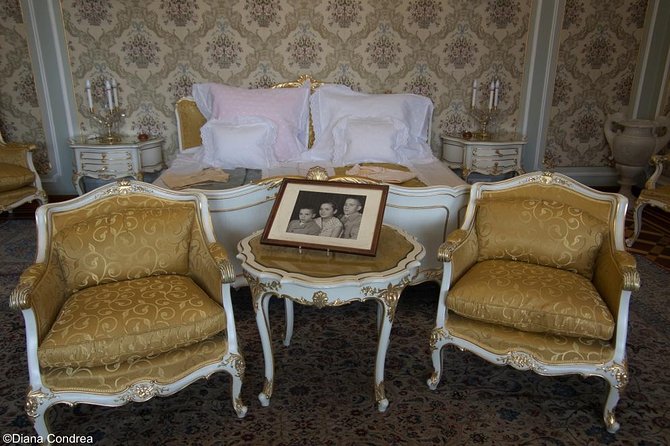
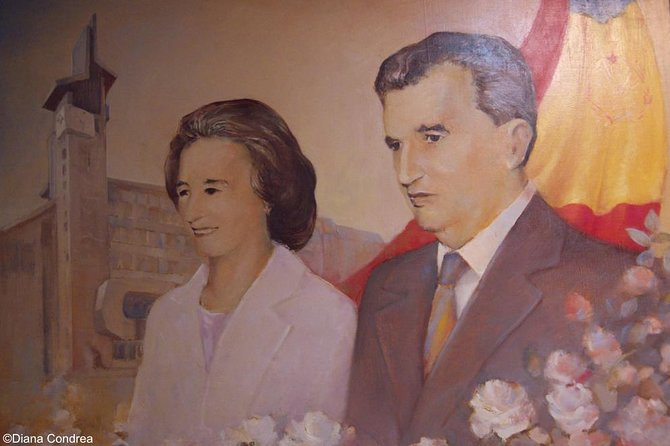
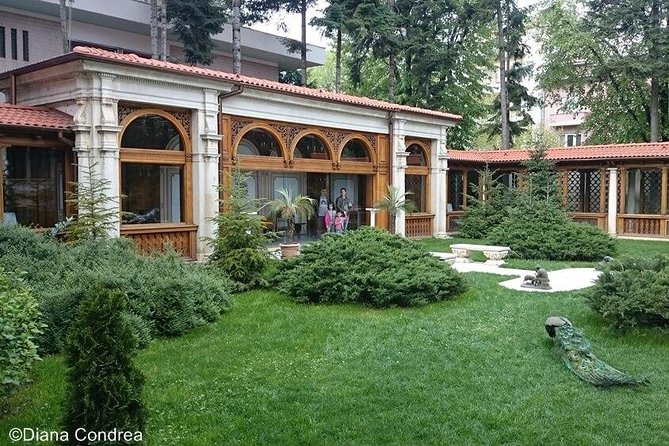
The former residence of Nicolae Ceausescu receives about an hour. This is where the tour moves from public monuments to private life, giving you a look at the home of Romania’s communist dictator.
A residence can reveal a different side of political power. The Palace of Parliament was designed to overwhelm the public, while a home can show how the ruling family lived and what comforts surrounded them. The tour description does not list individual rooms or furnishings, so your guide’s explanation will be central to understanding what you see.
This stop is also valuable because it puts a human scale on a leader often associated with huge avenues and colossal construction. You can ask how the mansion fits into the wider system of privilege and control, rather than treating it as a detached house tour.
The admission information lists this stop as free, but I would still rely on your booking confirmation and guide for the day’s exact access arrangements. The one-hour visit keeps it substantial without allowing the residence to take over the entire day.
Palace of Parliament: Monumental, Costly, and Hard to Ignore
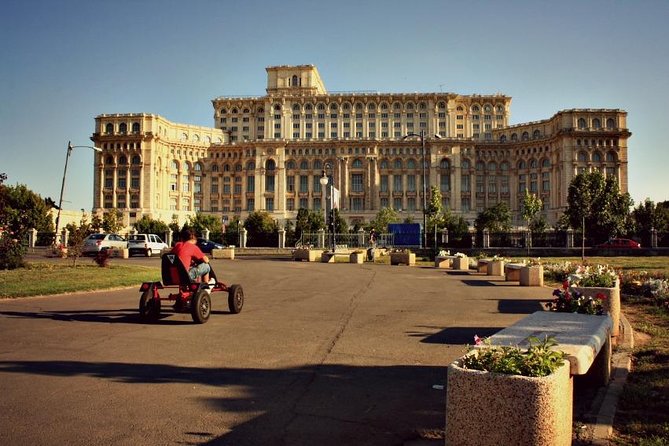
The Palace of Parliament is the tour’s largest sight and receives about 90 minutes. Romanians commonly call it the House of the People. It is the most famous building linked to the communist period and the second-largest administrative building in the world.
The scale is difficult to grasp from a short description. The building contains more than 1,000 rooms, along with handmade decoration and costly materials. The figures given for its construction include about one million cubic meters of marble and 3.5 tonnes of crystal. Those numbers help explain why the building remains such a powerful symbol of Ceausescu’s rule.
I like visiting this building with the political background already in place. Without context, it can look like a grand government complex. With the preceding stops, you can consider what its scale meant in a country ruled by a tightly controlled party and a leader who demanded enormous civic projects.
Admission is not included, so factor that into the $92.19 price. You also need a current valid passport on the day of travel. That requirement is important and should not be left until the morning of the tour.
The building is a clear highlight, but it can also be the part that divides opinion. You may admire the workmanship and sheer size while feeling uneasy about the human and economic cost represented by the project. That tension is exactly why the stop matters.
Constitution Square and the Communist Civic Center
After the Palace of Parliament, the route continues to Constitution Square for about 20 minutes. This is described as the heart of the communist civic center, so it helps you read the building in its intended setting rather than as an isolated structure.
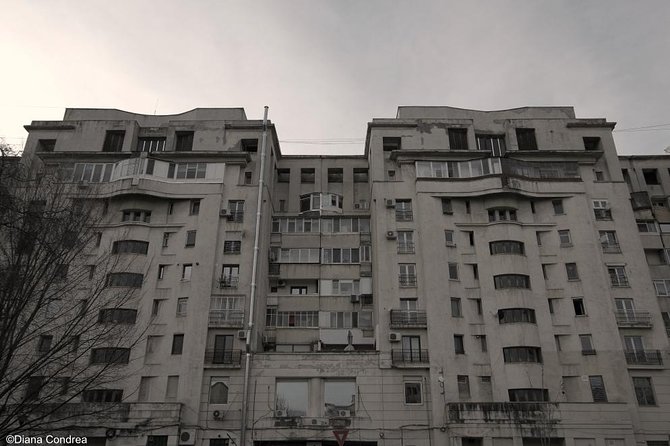
The square shows how communist urban planning favored scale, control, and ceremony. The surrounding open space was designed to frame monumental government power. You can compare the public space here with the more crowded political pressure of University’s Square and Revolution Square.
The short stop should be enough for an explanation and a look around, but it is not a long visit. I would treat it as a connecting chapter between the Palace and the churches that follow. The route is strongest when you notice how much city was altered to create this civic center.
Antim and Mihai Voda: Churches That Survived Demolition
The final two stops bring an unexpected change. Antim Monastery and Mihai Voda Monastery are churches saved from communist demolitions after being moved from their original locations. Each receives about 20 minutes.
These stops add an important point to the day: communist destruction was not total. Some religious buildings were removed, shifted, or protected rather than simply erased. Their survival gives you a more precise view of how the city was reshaped.
The short visits are likely best for seeing the buildings, hearing the story, and understanding their place in the urban plan. They are not presented as long services or extended religious visits. If you care about architecture and the survival of older Bucharest, ask the guide to explain how moving a church affected its setting and meaning.
I appreciate this ending because it avoids leaving you with only the Palace of Parliament as the final image of communism. The rescued monasteries show resistance, compromise, and the persistence of older Bucharest. They also bring the route back to human-scale buildings after the oversized civic center.
The Guide, Transport, and Seven-Hour Pace
The private guide is the main reason to choose this experience over a basic city sightseeing route. The guide can adjust the itinerary to your interests, explain political details in plain language, and respond to questions as they come up. The high 4.8 rating from eight published ratings reflects the strongest part of the experience: the guiding.
Laura is praised for being exceptionally informative and for knowing the city well. Diana is also praised for giving clear explanations and making the day enjoyable. One especially positive account describes a guide who was so helpful that the group felt the experience deserved ten stars, and who declined a tip at the end. That kind of generosity is unusual and worth noting, though you should not assume every guide will handle gratuities in exactly the same way.
Transport by private vehicle is included for some parts of the route. That is practical because the stops are not all next door to one another. Hotel pickup is available for groups of no more than three people. The activity begins at 8:30 a.m. and ends back at the meeting point.
You should have a moderate level of fitness. Even with vehicle transport, this is not a sit-down tour. You will walk through public spaces, spend time standing, and move through large sites. Lunch is taken at a city center restaurant, but food and drinks are not included, so budget for that midday break.
Is $92.19 a Fair Price?
The price is $92.19 per person. For a private seven-hour tour with a professional local guide, some private transport, and a flexible route, that can be fair value, especially for a small group.
The calculation changes if you add entrance fees. The Romanian Athenaeum and Palace of Parliament list admission as extra, and lunch and drinks are also separate. Hotel pickup is limited to groups of up to three, so larger parties should pay attention to the meeting instructions.
Group discounts may improve the value for a larger private party. The most important question is how much you value personal explanation. If you only want exterior photographs, the price may feel high. If you want help connecting revolution sites, royal buildings, Ceausescu’s home, the civic center, and the relocated churches, the guide gives the day its purpose.
Who Should Book This Bucharest Tour?
I would recommend it to you if you want political context, architectural detail, and a private pace. It is especially suitable for first-time visitors who want to understand why Bucharest looks the way it does, rather than simply collecting famous sights.
It also fits couples, families, and small groups who want to ask questions without holding up strangers. People with a strong interest in modern European politics, dictatorships, urban planning, or 20th-century architecture will get the most from it.
I would think twice if you dislike long days, serious historical subjects, or extra entrance fees. The schedule is full, and some stops depend more on the guide’s explanation than on an elaborate visitor display.
My Booking Verdict
Book this tour if you want the story behind Bucharest’s communist buildings and revolution sites, not just a drive past them. The private format, flexible route, and highly praised guides Laura and Diana are its strongest advantages.
Before paying, make room in your budget for Palace of Parliament and Athenaeum admission, lunch, and drinks. Bring your current passport, wear shoes suited to moderate walking, and begin at 8:30 a.m. For a small group that values a thoughtful guide and a full political picture, this is a strong use of one day in Bucharest.
FAQ
How long does the Communist Bucharest tour last?
The tour lasts approximately seven hours.
What time does the tour start?
The tour starts at 8:30 a.m.
Where does the tour begin?
It begins in Bucharest, with the exact meeting point provided for the activity.
Where does the tour end?
The activity ends back at the meeting point.
Is hotel pickup available?
Hotel pickup is offered for groups of up to three people.
Is this a private tour?
Yes. Only your group participates in the activity.
Is transportation included?
Transport by private vehicle is included for some parts of the itinerary.
Are meals included?
No. Food and drinks are not included. Lunch takes place at a city center restaurant.
Are entrance fees included?
No. Admission to the Romanian Athenaeum and Palace of Parliament is not included. The itinerary lists the other stops as free.
Do I need to bring a passport?
Yes. A current valid passport is required on the day of travel.
Just added in Bucharest
- Bucharest: Dealu Mare Winery Private Trip with Wine Tasting★ 4.9 · 6 reviews
- Winery touring & private wine tasting – one day private tour★ 5.0 · 3 reviews
- Village Museum Bucharest Guided Tour★ 5.0 · 6 reviews
- Transylvania Tour: Dracula’s Castle, Peles Palace & Brasov★ 5.0 · 19 reviews
- Transfer Airport Otopeni – Bucharest★ 5.0 · 2 reviews
- Private Transfer Bucharest Otopeni Airport (OTP) to/from Brasov★ 5.0 · 2 reviews
- Bucharest Airport Transfer To Constanta Mamaia★ 5.0 · 3 reviews
- Airport Henri Coanda (Otopeni) to Bucharest – Private Transfer – Driver★ 5.0 · 5 reviews
Communism and Ceausescu Tours, compared.
Bucharest Essential Tour: Old Town, Calea Victoriei & Communism
Read our review →
Communism in Bucharest – Landmarks, Museum & Communist Appetizers
Read our review →
Browse the lists this tour appears in