
REVIEW · COMMUNISM AND CEAUSESCU TOURS
Relics of Communism: 3-Hours Walking Tour (Small groups)
Bucharest’s buildings still carry political scars. This three-hour walk connects Revolution Square, Unirii Square, hidden churches, and the Palace of Parliament to the events and ideas that shaped modern Romania. I like the way the route uses real places rather than a museum room, and the small group, limited to 10 people, gives you a better chance to ask questions.
I also like that the tour includes a famous Romanian snack from the communist era, a small but useful touch during a long city walk. Guides Mara and Elena receive especially warm praise for making the subject clear and personal. The main consideration is that this is a walking tour with a moderate fitness requirement, and museum admission is not included.
In This Review
- Key points to know before booking
- Why this Bucharest walking tour is worth your time
- Revolution Square and the final speech of Ceausescu
- Piața 21 Decembrie 1989 and the revolution’s human cost
- Unirii Square and the communist city center
- Mihai Voda Monastery and religion under communism
- The Palace of Parliament and the final lesson in power
- What the small group changes
- Price, walking effort, and what you receive
- Who should book this experience
- Should you book Relics of Communism?
- FAQ
- Where does the tour begin?
- Where does the tour end?
- What time does the tour start?
- How long does the experience last?
- How many people can join the tour?
- Is the tour offered in English?
- Is food included?
- Are museum admissions included?
- What happens if the weather is poor?
Key points to know before booking
- Revolution Square gives the tour its strongest opening: You begin in front of the balcony where Nicolae Ceausescu made his final speech.
- The route explains more than architecture: You learn about the 1989 Revolution, communist power, religion, urban demolition, and the neo-communist period.
- The group is capped at 10 people: That is small enough for direct questions and more attention from the guide.
- Unirii Boulevard shows communist ambition at full scale: The broad avenue leads toward the Palace of Parliament and the former center of political power.
- A Romanian communist-era snack is included: It adds a practical break and a small taste of everyday life.
- The tour ends at Constitution Square: You finish in front of the Palace of Parliament, with no museum ticket included.
Why this Bucharest walking tour is worth your time
Bucharest can be difficult to read at street level. A grand boulevard may look like ordinary city planning. A church may appear to sit in an awkward place. A large government building may seem simply oversized. Without context, much of the communist story remains invisible.
This tour gives you that context while you walk. Instead of treating communism as a list of dates, it links political decisions to specific streets, squares, buildings, and religious sites. That makes the subject easier to grasp, especially if you are visiting Romania for the first time.
The route lasts about three hours and begins at 11:00 a.m. It moves through central Bucharest from Revolution Square to Constitution Square. The five main stops receive about 20 minutes each, with the remaining time used for walking and explanation.
The format suits you if you prefer conversation to a large scripted group. With no more than 10 people, you should have a fair chance to hear the guide and ask about daily life under communism. The tour is offered in English, and confirmation is sent when you book.
More Walking Tours in Bucharest
- Bucharest: City Highlights Guided Walking Tour
★ 4.9 · 1,482 reviews - Bucharest Highlights Walking Tour
★ 5.0 · 469 reviews - Bucharest: Ghost Stories & Romanian Mythology Walking Tour
★ 4.9 · 287 reviews
Revolution Square and the final speech of Ceausescu
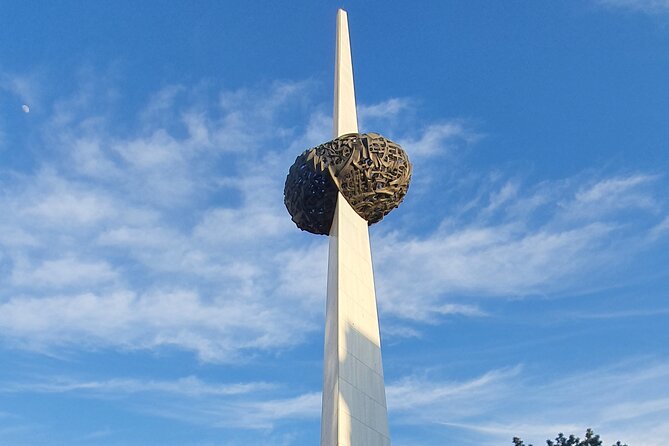
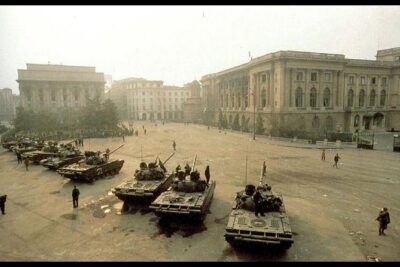
The tour begins at Revolution Square, Piața Revoluției, in front of the balcony where Nicolae Ceausescu gave his last speech. This is not just a convenient starting point. It puts you at the place where the final collapse of his rule became visible.
You hear about the 1989 Revolution in the same setting where the turning point began. The location helps you picture the political crisis rather than treating it as a distant event from a textbook. The first 20 minutes set up the rest of the walk by explaining how the regime reached its final days.
This stop is especially useful if you know only the broad outline of Romanian communism. You will hear about Ceausescu’s public image, his authority, and the events that made the speech so important. The guide’s stories give the square a human scale.
I would pay close attention here and ask questions early. The route becomes easier to follow once you understand why this particular balcony matters. Since admission is free, there is no added ticket cost at the opening stop.
Piața 21 Decembrie 1989 and the revolution’s human cost
The next stop is Piața 21 Decembrie 1989, where the focus shifts to the events of December 21. You learn about the incidents that took place then, the heroes of the Revolution, and the neo-communist era that followed.
This part prevents the story from ending too neatly in 1989. A political regime can fall, yet its people, institutions, and habits do not vanish overnight. By including the neo-communist period, the guide gives you a better sense of the complicated transition that came after Ceausescu.
The stop lasts about 20 minutes and is free to visit. Its value comes from the explanation, not from a formal attraction or an indoor display. You are looking at an active city square while learning how it became tied to protest, sacrifice, and political change.
If you have an interest in modern European history, this may be one of the most useful parts of the tour. It connects the Revolution to what came next instead of presenting 1989 as a clean finish line.
Unirii Square and the communist city center
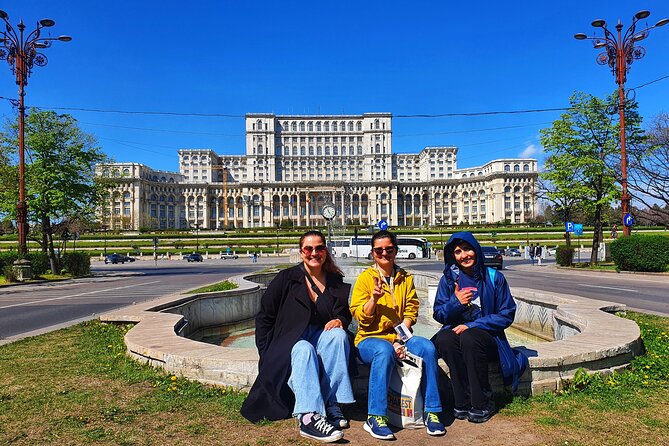
At Piata Unirii, the tour turns from street protest to city planning. You learn how Unirii Square became the new city center during the communist era and how the massive Unirii Boulevard cut through the area.
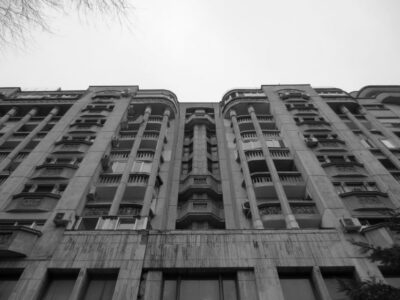
This is where the scale of Ceausescu’s vision becomes easier to understand. Wide avenues and large open spaces were not accidental. They helped create a setting suited to official ceremonies, public display, and centralized power.
The guide also explains the rise of Romania’s communist party and the growth of Ceausescu’s cult of personality. That pairing matters. The square is not only about concrete and traffic. It reflects how political power was presented to the public through urban design.
The stop lasts about 20 minutes and has no admission fee. You may find this part especially helpful if you enjoy architecture, planning, or photography. At the same time, the scale can be hard to interpret without guidance. On your own, you might notice the broad boulevard but miss the political message behind it.
More communism history tours:
- The Real tour of Communism
★ 5.0 · 666 reviews - Life under Communism
★ 5.0 · 358 reviews - 3-Hour Guided Tour of Communist Bucharest
★ 4.9 · 303 reviews - Bucharest Essential Tour: Old Town, Calea Victoriei & Communism
★ 5.0 · 142 reviews
Mihai Voda Monastery and religion under communism
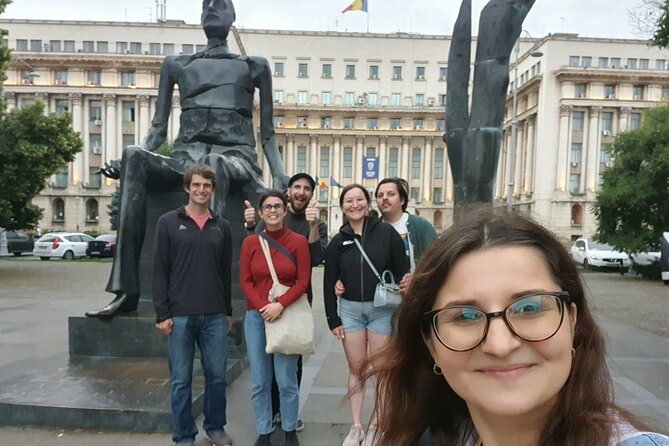
Mihai Voda Monastery offers a change of mood. Here, the guide introduces Bucharest’s lesser-seen churches and explains the relationship between the communist authorities and religion.
This stop matters because communist rule is often reduced to government buildings and political leaders. The story also involved faith, historic religious places, and decisions about what could remain visible in the city. The monastery gives you a more personal and cultural angle on the period.
You spend about 20 minutes here, and admission is free. The tour does not present the monastery simply as a pretty pause between larger sites. Instead, it uses the church to explain how religious life fit into a state that sought strong control over public life.
The wording of the route suggests that some churches are easy to miss without local direction. That is a real benefit of having a guide. You may walk past important places in Bucharest without understanding their survival or their displacement.
The Palace of Parliament and the final lesson in power
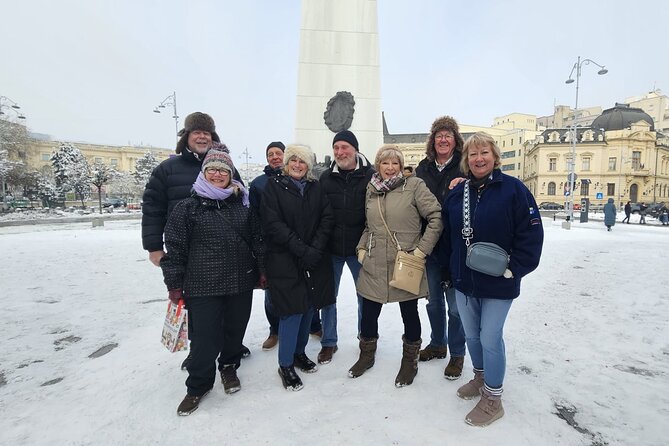
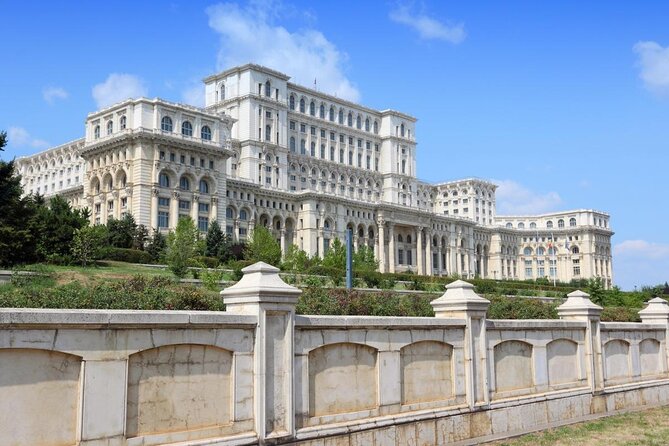
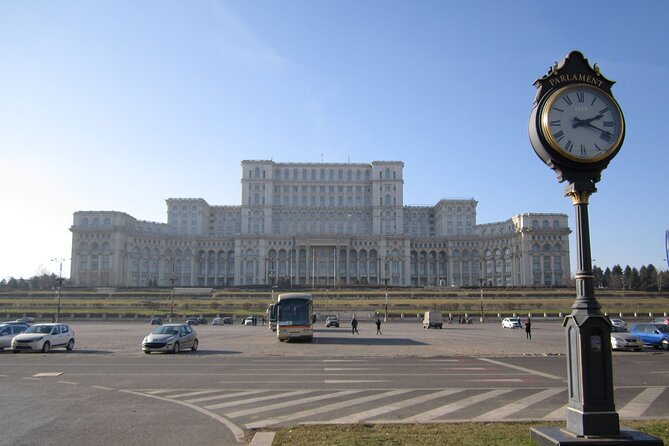
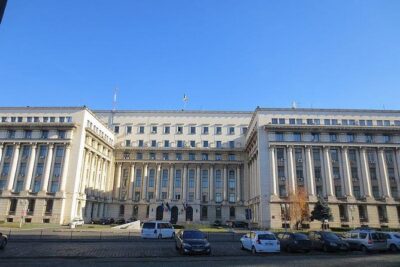
The last major stop is the Palace of Parliament, reached through the new districts associated with socialist realism and along Unirii Boulevard. The tour ends at Constitution Square, in front of the palace.
This is the visual climax of the walk. The building was designed as the absolute center of power, and the surrounding districts help explain the urban changes needed to create that setting. The guide also shares details about the palace, described as the second-largest administrative building in the world.
You should expect an exterior-focused visit, not a full palace tour. Admission to museums is not included, and the information supplied does not promise entry inside the Palace of Parliament. That is important when you compare this experience with a separate building tour.
Still, finishing here works well. The palace gathers together the themes introduced earlier: personal rule, monumental construction, forced changes to the city, and the effort to make political authority physically overwhelming. By the time you arrive, the building should mean more than its enormous size.
The tour finishes in Constitution Square rather than returning to Revolution Square. That can help with onward sightseeing, although no specific transport arrangement is included. The meeting and ending points are both in central Bucharest, near public transportation.
What the small group changes
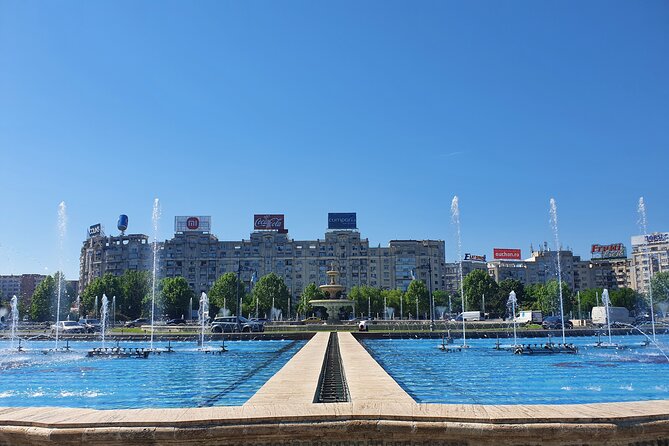
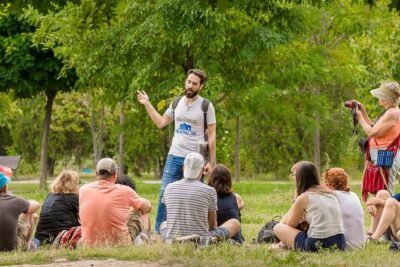
A maximum of 10 people is one of the tour’s strongest practical features. Communist history raises questions, and a small group makes it easier to ask about family life, political control, religion, or the transition after 1989.
The guide’s role is central. Mara is praised for answering detailed questions about life during communism and for making the tour personal and approachable. Elena is also praised for presenting a substantial amount of information while keeping the experience interesting and clear.
Those comments point to the tour’s main strength: interpretation. You are not paying simply to be led between five locations. You are paying for the links between those places and for the chance to ask about what the buildings meant to ordinary people.
The experience is offered in English. If you prefer a quiet walk with little commentary, this may feel information-heavy. If you want a stronger overview of Romanian communism, the amount of explanation is likely to be a plus.
Price, walking effort, and what you receive
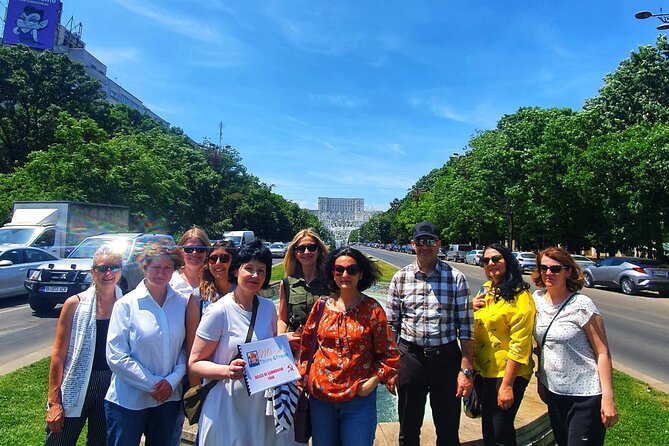
The price is $48.06 per person. For three hours in a group capped at 10, that is a reasonable price if you value a guide who can explain politics, architecture, religion, and recent history in one route.
You are not paying for museum tickets, and no museum admission is included. The price covers the guided walking experience and one famous Romanian snack from the communist period. That snack is not the main reason to book, but it gives you a small connection to daily food and helps break up the walk.
The tour requires moderate physical fitness. You should be comfortable walking for roughly three hours, with time spent standing at outdoor stops. The exact walking distance is not provided, so you should not assume the route is short simply because the city center is compact.
Weather also matters. The experience requires good weather, so poor conditions can lead to a new date or a full refund. Free cancellation is available if you cancel at least 24 hours before the start time. Cancellations made later are not refunded, and changes inside that period are not accepted.
The tour needs a minimum number of participants to operate. If that minimum is not met, you are offered another date or experience, or a full refund.
Who should book this experience
I would recommend this walk to first-time visitors who want a clear introduction to Bucharest’s communist era. It is also a good match for anyone interested in modern European politics, city planning, architecture, or the social effects of authoritarian rule.
The route works particularly well if you want to understand why central Bucharest looks the way it does. Revolution Square explains the collapse of the regime. Unirii Square and the boulevard show how the state reshaped the city. Mihai Voda Monastery adds religion and cultural survival. The Palace of Parliament brings the story back to power and spectacle.
You may want something else if your main goal is to tour the interior of the Palace of Parliament or visit museums. This experience does not include museum admission, and the supplied details do not promise indoor access to the palace.
I would also think twice if you dislike outdoor walking, need a fully seated tour, or are visiting during uncertain weather. The moderate fitness requirement is clear, and three hours can feel long if you are not comfortable standing and walking through the city.
Should you book Relics of Communism?
Book it if you want the city itself to explain Romania’s communist past. The route is well chosen, the group is small, the English-language format is practical, and guides such as Mara and Elena appear to bring the subject to life through detailed answers and clear storytelling.
The best reason to choose it is the connection between places. You will not simply see a famous square or a huge government building. You will learn why each site matters and how political power changed Bucharest.
Skip it if you are looking for museum entry, a palace interior tour, or a short sightseeing loop with little commentary. For the right reader, though, $48.06 buys a focused history lesson, a local snack, and a much clearer understanding of the city you are walking through.
FAQ
Where does the tour begin?
The tour begins at Revolution Square, Piața Revoluției, in Bucharest.
Where does the tour end?
It ends in Constitution Square, in front of the Palace of Parliament.
What time does the tour start?
The scheduled start time is 11:00 a.m.
How long does the experience last?
The walking tour lasts approximately three hours.
How many people can join the tour?
The group has a maximum of 10 participants.
Is the tour offered in English?
Yes. The experience is offered in English.
Is food included?
Yes. One famous Romanian snack from the communist era is included.
Are museum admissions included?
No. Admission to museums is not included.
What happens if the weather is poor?
If poor weather causes the tour to be canceled, you are offered a different date or a full refund.
Just added in Bucharest
- Bucharest: Dealu Mare Winery Private Trip with Wine Tasting★ 4.9 · 6 reviews
- Winery touring & private wine tasting – one day private tour★ 5.0 · 3 reviews
- Village Museum Bucharest Guided Tour★ 5.0 · 6 reviews
- Transylvania Tour: Dracula’s Castle, Peles Palace & Brasov★ 5.0 · 19 reviews
- Transfer Airport Otopeni – Bucharest★ 5.0 · 2 reviews
- Private Transfer Bucharest Otopeni Airport (OTP) to/from Brasov★ 5.0 · 2 reviews
- Bucharest Airport Transfer To Constanta Mamaia★ 5.0 · 3 reviews
- Airport Henri Coanda (Otopeni) to Bucharest – Private Transfer – Driver★ 5.0 · 5 reviews
Communism and Ceausescu Tours, compared.
Bucharest Essential Tour: Old Town, Calea Victoriei & Communism
Read our review →
Communism in Bucharest – Landmarks, Museum & Communist Appetizers
Read our review →

Browse the lists this tour appears in