
REVIEW · WALKING TOURS
Timișoara Highlights – Walking Tour
History changes quickly here. In two hours, this private walking tour links Timișoara’s oldest building, Ottoman-era Liberty Square, Saint George Square, old Habsburg walls, Union Square, the synagogue, and Victory Square. I like the clear historical route and the way it connects several empires and cultures without requiring museum tickets. I also like the guide’s use of stories, local legends, and personalities, especially the focus on the 1989 Revolution.
The main consideration is simple: this is a real two-hour walk, not a short orientation with a few photo stops. You need comfortable shoes and enough energy for the full route. Guide Armand Iftode Mihai has earned especially strong praise for his humor, excellent German, and ability to answer children’s questions in a lively way.
In This Review
- Key points at a glance
- Starting at Timișoara’s oldest building
- Liberty Square and the Ottoman chapter
- Saint George Square and the value of local stories
- Old city walls from the Habsburg era
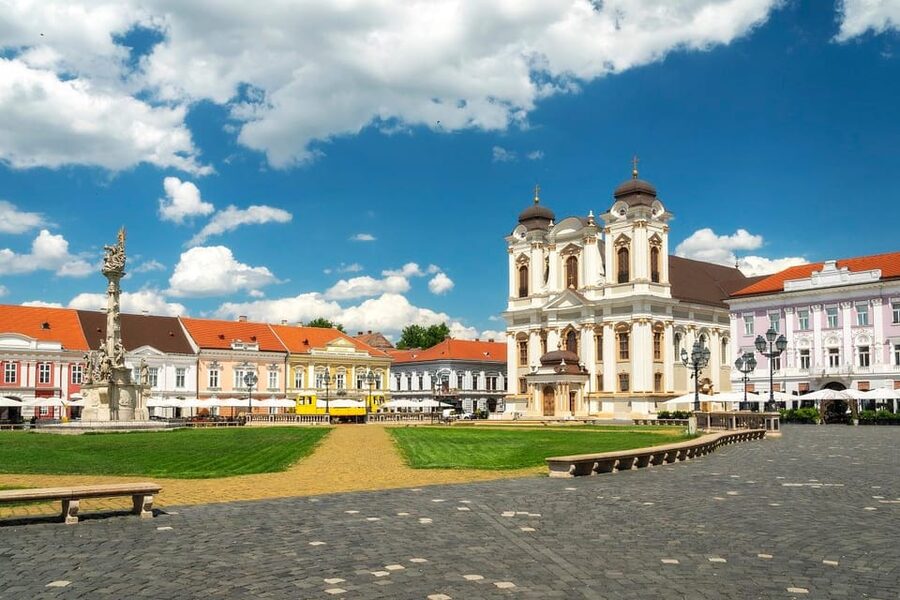
- Union Square and the city’s layered identity
- The synagogue and Timișoara’s Jewish presence
- Returning to Liberty Square before Victory Square
- How Armand guides the experience
- Walking comfort, access, and pace
- Is $35 a fair price?
- Who should book Timișoara Highlights?
- Should you book this walking tour?
- FAQ
- Where does the Timișoara Highlights Walking Tour begin?
- How long does the walking tour last?
- What languages are available?
- Is this a private group experience?
- Does the price include museum admission?
- Is the tour wheelchair accessible?
- What should I bring?
- Is the tour suitable for children?
- Can I cancel for a full refund?
Key points at a glance
- Seven centuries in one walk: The route moves through Ottoman, Habsburg, Jewish, and modern Romanian chapters of Timișoara’s past.
- A story-led tour: Armand uses facts, anecdotes, legends, and personalities instead of giving you a dry list of dates.
- The 1989 Revolution matters here: The final stop in Victory Square gives the tour a serious modern focus.
- Private and multilingual: You can book a private group with guiding in English, German, or Romanian.
- No museum fees: The $35 price covers the city-center walk, with no extra admission tickets needed.
- Good for families, with one condition: Children have been well served by the storytelling, but everyone must be comfortable walking for two hours.
Starting at Timișoara’s oldest building
The tour begins at the oldest building in Timișoara. That is a useful starting point because you meet the city at its earliest surviving architectural layer, rather than beginning with a grand modern square and working backward.
From there, the walk moves toward Liberty Square. You are not simply being shown attractive buildings. The guide uses the route to explain how Timișoara changed hands, cultures, and languages over the centuries. That wider frame is one of the best reasons to book a guided walk here.
Timișoara has long been shaped by different rulers and communities. During the tour, you will hear about the languages spoken in the city across roughly 700 years. The opening phrase used to introduce the experience, Guten Tag, Bună ziua, Jó napot, Dobro jutro, neatly hints at that mixture of German, Romanian, Hungarian, and South Slavic influence.
I appreciate that the tour does not treat the city as a single-culture destination. You get a sense of how its identity was formed by layers of rule and settlement. That is much more useful than memorizing one founding date.
More Walking Tours in Timisoara
- Timisoara All in One – Walking and Tram Tour
★ 5.0 · 72 reviews - Timisoara: Guided Walking Tour
★ 4.9 · 38 reviews - Timisoara: Classic Walking Tour
★ 5.0 · 26 reviews
Liberty Square and the Ottoman chapter
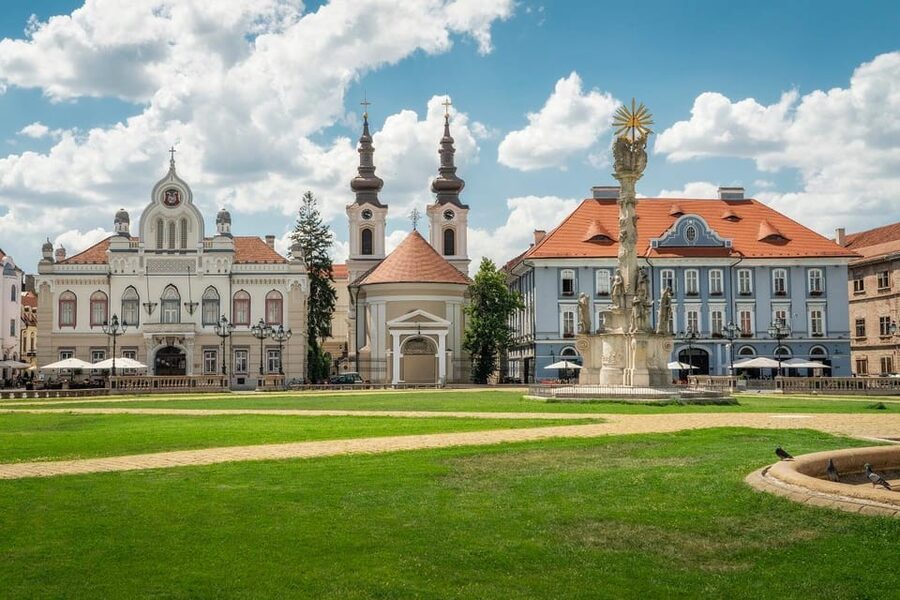
Liberty Square is the first major historical stop. Here, the guide explains what Timișoara was like during the Ottoman period.
This part should appeal to you if you want political history tied to a real place. The square becomes a setting for understanding conquest, administration, and daily life, rather than just a pretty urban space. The details will depend on the guide’s presentation, but the purpose is clear: to show how Ottoman control affected the city and how later changes replaced or reshaped that period.
Liberty Square also appears again near the end of the route, before the group continues to Victory Square. That return gives the itinerary a loose circular shape and lets the guide connect earlier conquest with later political change.
The advantage of covering this material on foot is scale. You can see how one central space relates to the surrounding streets and squares. The limitation is that no museum interiors are included, so you will not get displayed artifacts or indoor exhibits connected to the Ottoman period. This tour works best as a city introduction and historical framework.
Saint George Square and the value of local stories
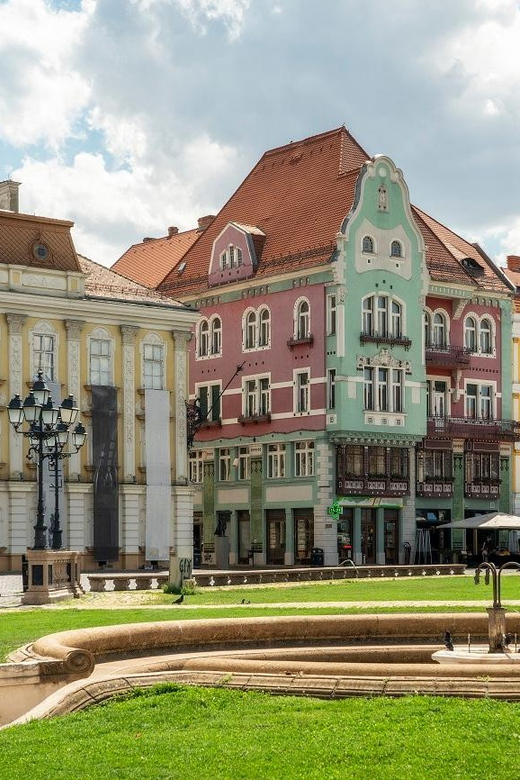
The next stop is Saint George Square, where the guide shares fun facts and stories about Timișoara.
This is where Armand’s style appears to matter most. His strongest praise centers on humor, anecdotes, and the ability to make history easy to follow. I would choose this tour if you enjoy learning through personalities and small details, not only through military dates and political names.
A good guide can turn a square into a conversation about the people who shaped it. You might hear details that help you notice architectural features, understand why a place matters, or picture how the square functioned at different times. The description specifically promises fun facts and personalities, so expect a lighter tone here than in the later discussion of the Revolution.
Families may find this part especially useful. Armand has handled questions from a 13-year-old in a clear, age-appropriate way, and another family gave him top marks for making the tour work well for children. That does not mean young children will automatically enjoy a full two-hour walk. It means the presentation can adapt to curious children who are willing to keep moving.
Old city walls from the Habsburg era
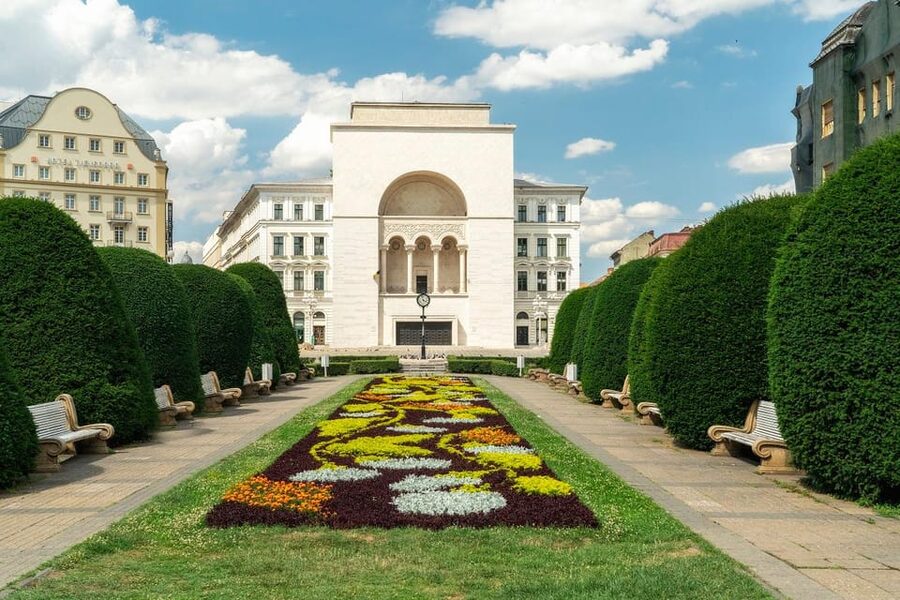
The walk then reaches the old city walls from the Habsburg era. This is an important change in the story because it shifts attention from conquest and city life to defense, planning, and imperial control.
Old fortifications help you picture the city as a strategic place. You can better understand why Timișoara mattered and how its physical shape was influenced by military needs. The stop also gives the route some variety. You are not spending the full two hours in open squares, listening to the same type of explanation.
The tour does not promise entry into a fortification museum or preserved underground passages. You should think of this as an outdoor historical stop, with the guide explaining what you are seeing and why the walls mattered. For a first visit, that is often enough to give you a useful mental map, especially if you plan to explore more on your own afterward.
I would pay attention here to the way the guide links buildings and defenses to changes in political power. That connection is one of the tour’s strongest features. Timișoara’s story is easier to follow when you see each era as part of a sequence rather than as isolated landmarks.
More Timisoara trips:
- The Classic Tour of Timisoara
★ 5.0 · 154 reviews - Weekly Guided Tour in English – Tuesday, Thursday, Saturday
★ 5.0 · 84 reviews - Day trip to Corvin Castle and Sibiu (and back) from Timisoara
★ 5.0 · 30 reviews - Danube Gorge & Banat Waterfalls
★ 5.0 · 27 reviews
Union Square and the city’s layered identity
After the old walls, the group makes a short walk to Union Square. The route uses this square as another chance to explain how different communities and rulers left their mark on the city.
Union Square is a natural place for this kind of discussion because the tour is built around public spaces. You will hear less about private interiors and more about how the city presents its history in streets, facades, squares, and monuments. That makes the walk accessible even if you have not done much preparation before arriving.
I like the decision to keep the tour in the city center. You do not lose time on transportation, and the historical sequence remains easy to follow. At $35 per person, the value comes from getting a private guide to interpret several central areas in one sitting. If you only want a quick list of landmarks, the price may feel high. If you want context, questions answered in real time, and a route shaped around your group, it is a fair city introduction.
There is also practical value in being able to ask about your stay in Timișoara. Armand has been praised for answering practical questions about the city, so use the walking time well. Ask about places you have just passed, other areas worth seeing, or details you did not understand. The experience is private, which should make that kind of conversation easier.
The synagogue and Timișoara’s Jewish presence
The itinerary includes a stop at the synagogue. This adds an important community story to a route already covering Ottoman and Habsburg periods.
The stop is significant because it keeps Timișoara’s history from becoming only a tale of rulers and wars. A city is also shaped by the communities that worship, work, trade, and build there. The synagogue gives the guide a clear point from which to discuss the Jewish presence in Timișoara and the cultural mix that the tour emphasizes.
Do not expect an interior visit. The price includes walking through the city center, but the tour does not enter museums and no extra tickets are needed. The synagogue stop is therefore best understood as an exterior landmark and a historical subject, not as a guided religious building visit.
That distinction matters if you are hoping to see interiors at every stop. You will get more coverage of the city as a whole, but less time inside individual sites. For a two-hour tour, that is a sensible tradeoff.
Returning to Liberty Square before Victory Square
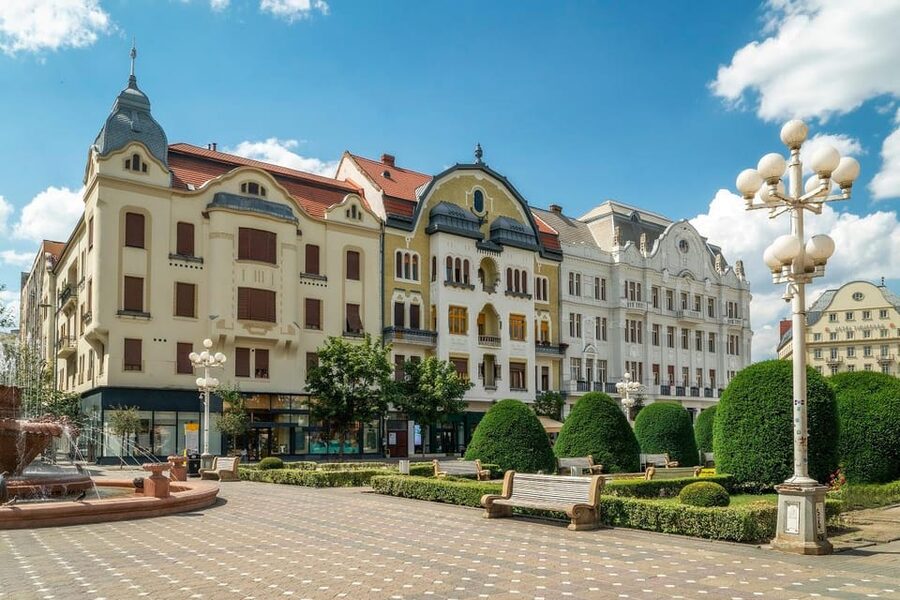
The route returns to Liberty Square and then continues to Victory Square. This transition moves the tour from older chapters of rule to the modern history of Romania.
Victory Square is the emotional focus of the experience because it is tied to the 1989 Revolution. The guide explains the revolution that happened in Timișoara, giving you a chance to understand the city’s role in one of the most important political changes in modern Romanian history.
I would not treat this final stop as just another monument photo. The subject is serious, and it gives the earlier sections more meaning. You have already heard how power changed hands through conquest and imperial rule. Now you reach a modern moment when people challenged the political system themselves.
Armand’s storytelling about the Revolution has been singled out as a particularly memorable part of the tour. His approach appears to combine information with personal human detail, which helps keep the subject from becoming a cold political summary. You should expect this section to be more reflective than the fun-fact portions in Saint George Square.
The timing also works well. Ending in Victory Square gives the walk a clear conclusion instead of simply stopping at the last convenient landmark. You finish with the city’s recent past still in mind.
How Armand guides the experience
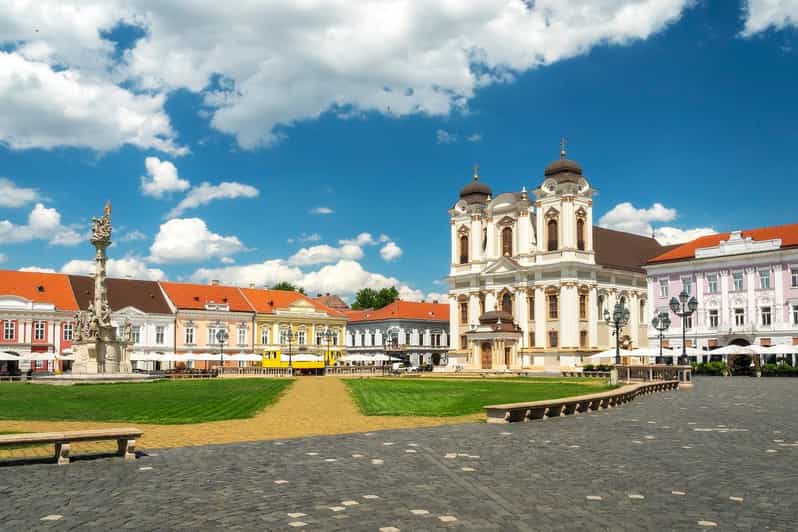
The guide’s name is Armand Iftode Mihai, and the praise for his approach is unusually consistent. He is described as humorous, kind, informative, and able to present history as a memorable story.
I would especially consider this tour if you prefer an active guide who welcomes questions. Armand has handled a teenager’s questions well, explained the city effectively for a 12-year-old, and answered practical questions about staying in Timișoara. Those details suggest a flexible teaching style rather than a fixed speech delivered at the same pace to everyone.
His German is reported to be excellent, and the tour is also offered in English and Romanian. If you are choosing a language for a mixed group, confirm that your selected language works for everyone before booking. A private group makes it easier to choose the language and keep the pace suited to your party.
The use of legends and local anecdotes is another plus. Just remember that stories and legends serve a different purpose from archival history. They make a place memorable, while the guide’s historical explanation gives you the basic framework. The best part of this tour appears to be the combination.
Walking comfort, access, and pace
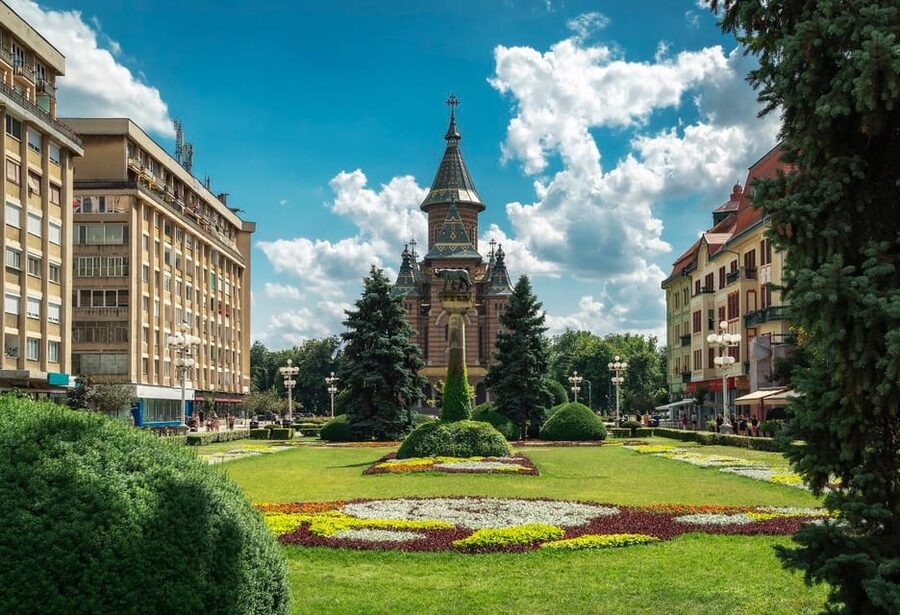
The tour lasts two hours and takes place on foot. Bring comfortable shoes, and think honestly about the needs of everyone in your group.
The experience is listed as wheelchair accessible, which is helpful information for planning. Still, accessibility does not remove the need to consider stamina, street conditions, or the length of the walk. The tour information specifically asks you to make sure older people and very young children are comfortable with two hours of walking.
You will not need extra tickets because no museums are entered. That keeps the schedule simple and removes the common problem of paying for several small admissions during a short city tour.
The private format is another practical advantage. You are not being fitted into a large group’s pace or listening to questions that do not interest you. You can ask for clarification, pause for a photograph, or focus more closely on the periods that matter most to your group, within the limits of a two-hour route.
Is $35 a fair price?
At $35 per person, this is not the cheapest way to look around Timișoara. You can walk through the central squares on your own without spending anything.
The question is what you want from the visit. For the price, you receive a two-hour private walking tour, a live guide, explanations in English, German, or Romanian, and a route that covers several major historical chapters. There are no added museum tickets, so the stated price is close to the final activity cost.
I see the strongest value for first-time visitors, families, and anyone who wants the city’s history explained in a connected way. It is also useful early in a stay, when a guide can help you understand what you are seeing before you explore independently.
The value is weaker if you want long interior visits, a specialist architectural tour, or a slow photographic walk. This is a broad city-center survey with storytelling. It covers a lot, but each stop receives limited time.
Who should book Timișoara Highlights?
I would recommend it to you if you want:
- A private introduction to Timișoara’s central landmarks
- Clear links between Ottoman, Habsburg, Jewish, and modern Romanian history
- A guide who can explain difficult subjects to adults and children
- A multilingual experience in English, German, or Romanian
- A walking route with no extra entrance fees
- A useful first look at the 1989 Revolution in Victory Square
I would be more cautious if anyone in your group cannot comfortably walk for two hours. I would also choose another format if your main goal is entering museums or spending extended time inside the synagogue or other buildings.
Should you book this walking tour?
Book it if you want Timișoara explained as a city of changing rulers, languages, communities, and political movements. The route is well chosen, and Armand’s humor, local stories, German-language ability, and work with children add real value.
Skip it only if you strongly prefer exploring alone or need frequent indoor stops. For most first visits, $35 is a reasonable price for a private two-hour introduction that ends with the powerful story of the 1989 Revolution.
FAQ
Where does the Timișoara Highlights Walking Tour begin?
The tour begins at the oldest building in Timișoara.
How long does the walking tour last?
The walking tour lasts two hours.
What languages are available?
The live guide can conduct the tour in German, English, or Romanian.
Is this a private group experience?
Yes. The tour is offered for a private group.
Does the price include museum admission?
No museum visits are included. The tour remains outdoors in the city center, and no extra tickets are necessary.
Is the tour wheelchair accessible?
Yes, the activity is listed as wheelchair accessible.
What should I bring?
Bring comfortable shoes because the experience is a two-hour walking tour.
Is the tour suitable for children?
Children are welcome, but everyone joining should be comfortable walking for two hours. The guide has experience answering questions from children and teenagers.
Can I cancel for a full refund?
Yes. You can cancel up to 24 hours in advance for a full refund.
Just added in Timisoara
- Timisoara Downtown Dream Tour★ 5.0 · 5 reviews
- Bite your way through Timisoara – Timisoara’s Street Food Tour★ 5.0 · 14 reviews
- Timişoara: Private Walking Tour with Local Guide★ 5.0 · 1 review
- The Grand Tour of Communist Ages at Timisoara★ 5.0 · 17 reviews
- The Jewish Heritage Tour of Timisoara★ 5.0 · 9 reviews
- Nera Gorge National Park – Private Day Tour from Timisoara★ 4.5 · 4 reviews
- Hiking back in time: The Remote Villages of Banat★ 5.0 · 2 reviews
- One Day in Transylvania – Departure from Timisoara★ 5.0 · 16 reviews
Walking Tours, compared.
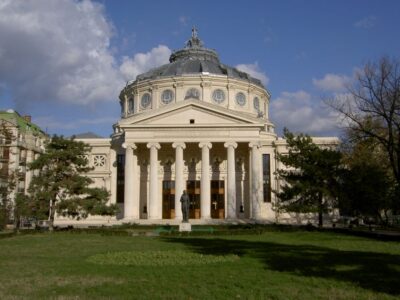
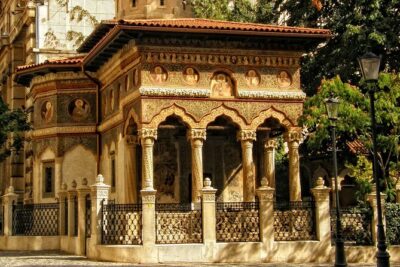
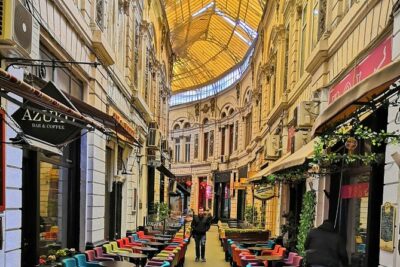
Walking Tour- Delightful Bucharest (Highlights, Stories, Sights)
Read our review →

4h Bucharest Private Tour (2h by Car and 2h Walking in Old Town)
Read our review →
Browse the lists this tour appears in