
REVIEW · COMMUNISM AND CEAUSESCU TOURS
Communist Museums Marathon: 3 museums and all transfers incl
Communism fits into one long Bucharest day. This tour links Ceausescu’s House, the Palace of Parliament, and modern art into one focused look at Romania from the postwar years through 1989. I like the clear historical theme, and I like that hotel pickup plus museum transfers remove much of Bucharest’s transport puzzle. The main caution is the price: at $289 per person, this is a costly day unless you value private planning and guided context.
The small group limit of eight should make questions easier and keep the day more personal than a large coach outing. I also like that the tour does not stop at political monuments alone. The Museum of Recent Art or the National Museum of Contemporary Art adds an artistic view of how Romania’s culture changed. One verified booking praised the guide Cristina as excellent, a useful sign for anyone hoping for a strong English-speaking guide.
In This Review
- Key points to know before booking
- Why this Bucharest museum marathon works
- Ceausescu’s House and the private side of power
- The Palace of Parliament puts scale before comfort
- Contemporary art at MRAC or MNAC
- Transfers make the ambitious schedule practical
- What $289 per person really buys
- Who will get the most from this day
- Small details that make the day easier
- Should you book the Communist Museums Marathon?
- FAQ
- How long does the Communist Museums Marathon last?
- Which museums are included?
- Is transportation included?
- What language is the tour offered in?
- How large is the group?
- What should I bring?
- Can I cancel the booking?
Key points to know before booking
- Three very different stops: You move from a former dictator’s home, to a vast seat of government, to contemporary art.
- A full day about the 20th century: The focus runs from the post World War II period through the fall of communism in 1989.
- Hotel pickup and drop-off included: Transfers between sites are arranged, which is valuable when museum timing and Bucharest traffic need coordination.
- Small group, maximum eight people: You should have a better chance to ask questions and hear the guide clearly.
- Book at least five working days ahead: The museums are busy, and advance planning is especially important for groups.
- Comfortable shoes matter: Expect a moderate amount of walking, with food and drinks banned inside the exhibits and vehicle.
Why this Bucharest museum marathon works
This is not a general city sightseeing tour with a few communist references added on. The day has a firm subject: Romania’s political, social, and artistic life during the communist era and its aftermath.
That focus is useful because Bucharest can otherwise feel like a city of disconnected sights. You see grand government architecture, a private domestic setting, and art made in or shaped by more recent decades. Together, the stops help you compare official power with private life and artistic expression.
The tour also suits curious visitors who want more than dates and buildings. A guide can explain why each place matters and connect the objects, rooms, and works on display to major events. Since the group is capped at eight, you can ask for clarification instead of simply following a flag through crowded rooms.
Still, this is a demanding day. Three cultural sites can leave you mentally full, especially when the subject is political repression, propaganda, and the changes after 1989. I would choose this tour for substance, not for a relaxed pace.
More communism history tours:
- The Real tour of Communism
★ 5.0 · 666 reviews - Life under Communism
★ 5.0 · 358 reviews - 3-Hour Guided Tour of Communist Bucharest
★ 4.9 · 303 reviews
Ceausescu’s House and the private side of power
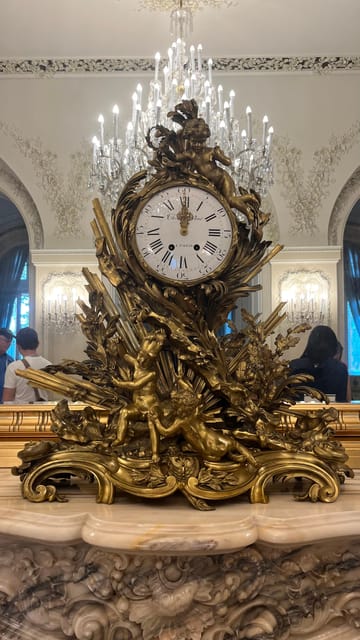
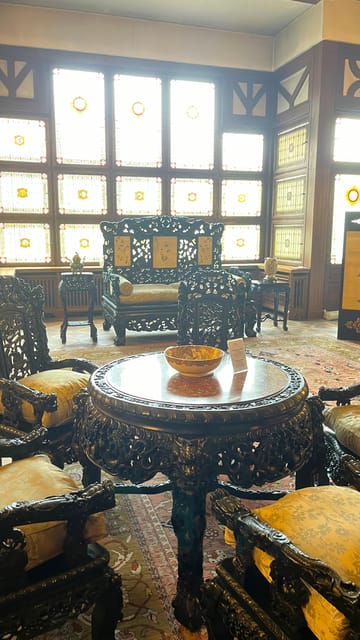
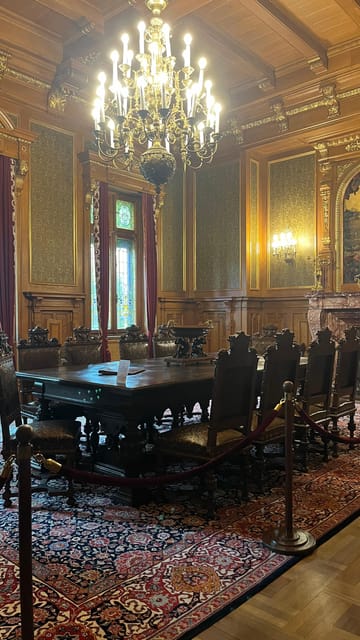
Ceausescu’s House gives the day a personal starting point. Rather than looking only at public monuments, you enter a place associated with Nicolae Ceausescu and his family. That shift from official history to domestic space can make the period easier to picture.
The value here is the contrast between public ideology and private life. You may find that rooms, furnishings, and personal surroundings raise questions that a textbook cannot answer. How did the ruling family present itself? What did power look like behind closed doors? How far was that private world from ordinary Romanian life?
Your guide’s role matters greatly at this stop. The building itself cannot explain every political detail, and a guided visit can keep the focus on significance rather than simple decoration. Ask questions about the historical period and the events leading toward 1989.
Ceausescu’s House is also likely to appeal to visitors who prefer tangible evidence over abstract discussion. You are not only hearing about the regime. You are seeing a setting linked directly to its highest figures.
The limitation is that the stop may feel narrow if you want a broad survey of Romanian society. It centers on one ruling household, so the tour’s other museums are important. They widen the story beyond the Ceausescu family.
The Palace of Parliament puts scale before comfort
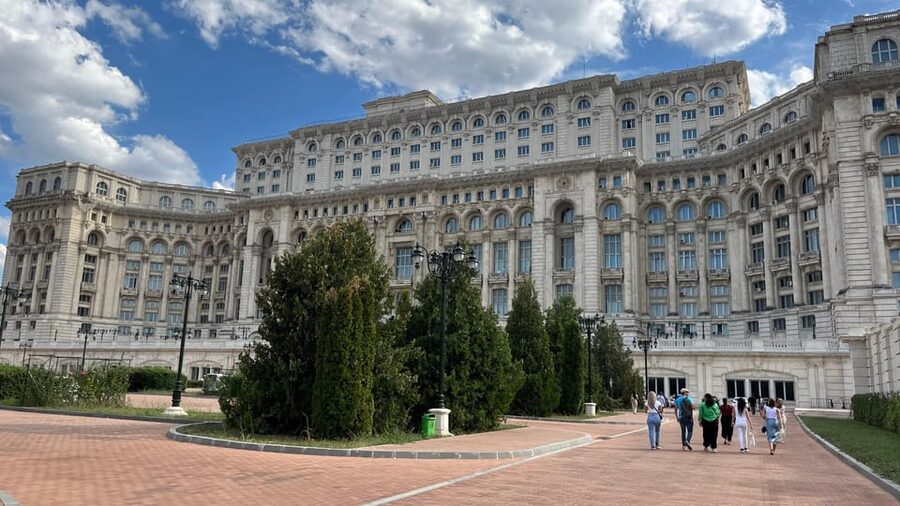
The Palace of Parliament gives you the largest visual statement of communist power in Bucharest. Its size and formal design communicate ambition on a scale that ordinary political history cannot match.
This is one of the clearest reasons to take a guided visit. A huge building can overwhelm you, but without context, you may leave remembering only its size. The guide can explain the building’s place in Romania’s communist period and its meaning as a cultural and political landmark.
Expect walking here. The tour information specifically calls for comfortable shoes and notes a moderate amount of walking overall. Exact routes and time inside each museum are not given, so you should be ready for a substantial day rather than a quick photo stop.
The Palace also adds a useful public dimension to the private setting of Ceausescu’s House. At the first stop, you consider the people at the center of power. Here, you confront the public image and physical expression of that power.
There is a practical point to remember: bring your passport or identity card. The tour information lists a passport and passport or ID card among the items to bring. Since this is a working and highly controlled landmark, carry the required identification and follow the guide’s instructions.
Some visitors may find the Palace’s scale more impressive than intimate. That is part of the point, but it can also make the experience feel formal and heavy. I would not choose this stop alone for a short Bucharest visit. Within this three-part day, though, it provides an essential counterweight to the smaller museums.
Contemporary art at MRAC or MNAC
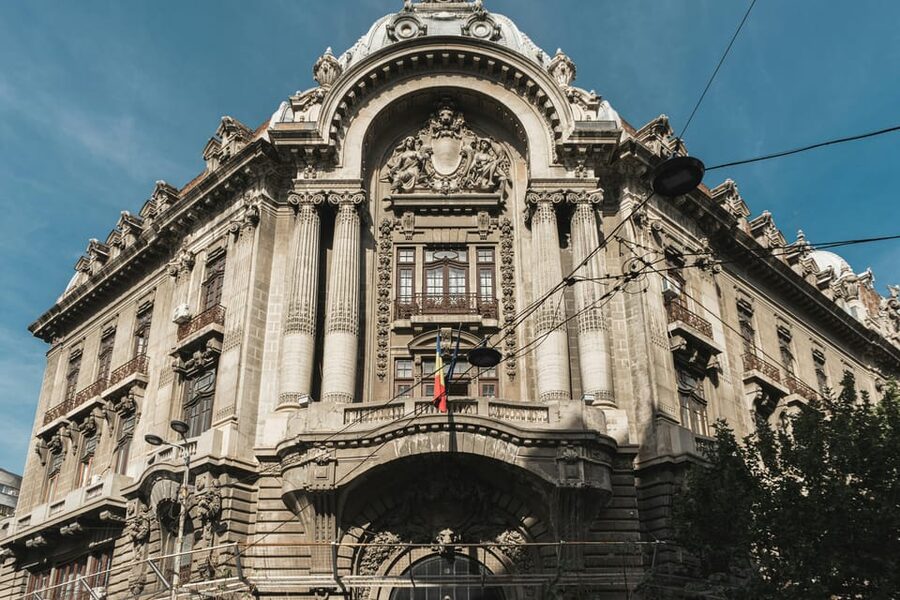
The final museum option is the Museum of Recent Art, also described as the National Museum of Contemporary Art. This stop changes the tone of the day.
After seeing places connected with political authority, you turn toward artistic responses and cultural change. The museum helps place Romania’s communist past within a wider story of modern and contemporary art. The tour is designed for art enthusiasts, but you do not need to be an art specialist to benefit. A good explanation of the artists and works can show how culture reflects a country’s changing public life.
This is also where the tour moves beyond nostalgia for old buildings. Contemporary art can be harder to read than a historic room or monumental facade, so the guide’s explanations are especially useful. You can ask what a work says about the period, how artists responded to change, and why certain pieces matter.
The provided details do not specify the exact gallery route, featured artists, or the order of the three stops. That is worth knowing before you book. You are buying a guided museum day with three named institutions, not a promise of a particular temporary exhibition.
I like the inclusion of this museum because it keeps the day from becoming a simple parade of communist-era objects. It shows that Bucharest’s story continued after 1989 and that artistic life offers another way to understand social change.
The drawback is fatigue. Contemporary art asks for attention, and it comes after two historically weighty locations. If you prefer art to be the main event, a separate museum visit may suit you better. On this tour, however, the art museum gives the historical program a necessary second half.
More Museum Tours in Bucharest:
- Bucharest: Museum of Senses Entry Ticket
★ 4.2 · 364 reviews - Communism in Bucharest – Landmarks, Museum & Communist Appetizers
★ 5.0 · 111 reviews - Bucharest: Entry ticket at the Museum of Communism
★ 4.6 · 57 reviews - Bucharest: Museum of Communism Ticket with Communist Coffee
★ 4.6 · 52 reviews
Transfers make the ambitious schedule practical
The tour includes hotel pickup and drop-off, plus transport between the museums. That is a major part of the value.
Bucharest’s sites are not presented as a simple walk from one address to the next. With three museums in one day, you could lose time working out routes, waiting for transport, or arriving at a timed entrance after a delay. Having the provider handle transfers makes the plan easier to follow.
The small group size also affects the experience. With no more than eight participants, getting into and out of the vehicle should be simpler than with a large group, and the guide can keep track of everyone more easily. You also have a better chance to ask a question during the drive or discuss what you have just seen.
The details do not provide exact pickup times, museum sequence, vehicle type, or time spent at each stop. Do not book this expecting a fixed schedule down to the minute. Museum availability and traffic may shape the day, which is one reason the provider asks you to book at least five working days ahead.
That advance notice is not a minor footnote. These museums are busy, and groups require planning. If your Bucharest stay is short, reserve early rather than waiting until the last day.
What $289 per person really buys
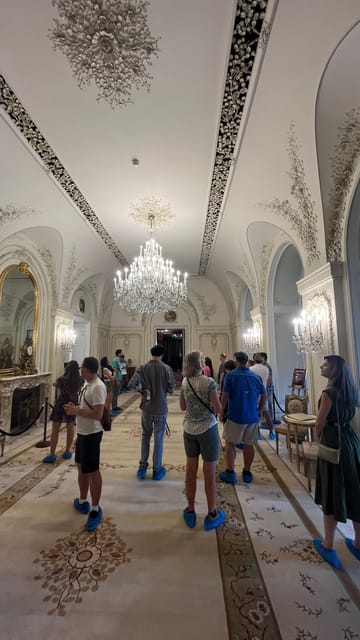
At $289 per person, this is not a budget museum pass. The cost includes admission to all three named museums, an English-speaking guide, hotel pickup and drop-off, and transport between locations.
The fair question is how much planning you want to do yourself. You could potentially arrange individual museum visits for less, but you would need to manage admissions, transfers, timing, and the historical connections between places. This tour packages those tasks into one day.
I see the price as easier to justify for first-time visitors with limited time, couples who want a private-feeling small group, and history fans who want interpretation rather than self-guided visits. It is harder to justify if you are comfortable using Bucharest’s transport system, prefer to visit museums slowly, or mainly want inexpensive sightseeing.
Food and drinks are not included. They are also not allowed inside the exhibits or in the vehicle. Plan your meals around the museum visits, but do not assume you can eat during the transfers. The tour information does not specify a meal stop, so arrange your own food before or after the day and follow the guide’s instructions.
The free cancellation policy adds some flexibility. You can cancel up to 24 hours in advance for a full refund, and the reserve now, pay later option means you do not have to pay at the time of booking. Those terms help reduce the risk of committing to an expensive day too early.
Who will get the most from this day
I would recommend this tour to you if you:
- Want a focused introduction to Romanian communism and its aftermath
- Prefer guided context at museums and landmarks
- Have only one day for a serious look at Bucharest’s 20th century
- Like connecting architecture, domestic history, politics, and art
- Value hotel pickup and arranged transport
- Prefer a group of no more than eight people
I would hesitate if you want a slow, flexible museum day. Three institutions in one day is ambitious, and the amount of walking may be tiring. I would also think twice if your main interest is only the Palace of Parliament, since this tour gives equal importance to the other two stops and the wider historical theme.
The English-only format is another consideration. If English is comfortable for you, the language setup is simple. If you need another language, this experience is not presented as a suitable choice.
Small details that make the day easier
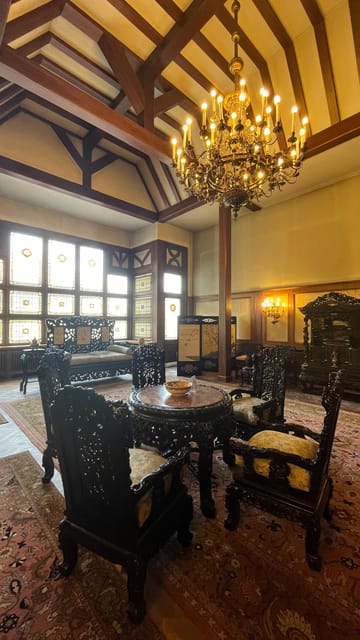
Wear shoes you can walk in for several hours. Bring your passport or ID card, and keep it available as required.
Do not bring alcohol or drugs. Alcoholic drinks, food, and other drinks are not allowed in the vehicle, and food and drinks are not allowed inside the museum exhibits.
Book at least five working days in advance. This matters most for groups, since the museums are busy and the visits require advance coordination.
The tour is listed as lasting one day, but no precise start time is supplied. Check availability before booking and keep the rest of your schedule light. A three museum program with transfers deserves room for delays and questions.
The guide can make or break a history-heavy day. Cristina received particular praise for being excellent, so if she is assigned to your departure, you may be in especially good hands. Still, guide assignments can vary, and the service is described generally as an expert English-speaking guide.
Should you book the Communist Museums Marathon?
Book it if you want Bucharest’s communist past explained through places, not just summarized in a lecture. The combination of Ceausescu’s House, the Palace of Parliament, and recent art gives you three distinct views of the period. Hotel transfers and a group limited to eight also remove much of the day’s practical work.
Skip it if $289 feels too high, or if you would rather visit one museum at your own pace. This is a concentrated, walking-heavy day with a serious subject. For a history-minded visitor who has limited time and wants a guide to connect the pieces, it offers a clear and efficient way to understand a difficult chapter of Bucharest’s story.
FAQ
How long does the Communist Museums Marathon last?
The experience lasts one day.
Which museums are included?
Admission is included for Ceausescu’s House, the Palace of Parliament, and the Museum of Recent Art or National Museum of Contemporary Art.
Is transportation included?
Yes. Hotel pickup and drop-off are included, along with transport between the museums.
What language is the tour offered in?
The tour is offered in English.
How large is the group?
It is a small-group tour limited to eight participants.
What should I bring?
Bring your passport and passport or ID card. Comfortable walking shoes are also recommended.
Can I cancel the booking?
Yes. You can cancel up to 24 hours in advance for a full refund. The reserve now, pay later option is also available.
Just added in Bucharest
- Bucharest: Dealu Mare Winery Private Trip with Wine Tasting★ 4.9 · 6 reviews
- Winery touring & private wine tasting – one day private tour★ 5.0 · 3 reviews
- Village Museum Bucharest Guided Tour★ 5.0 · 6 reviews
- Transylvania Tour: Dracula’s Castle, Peles Palace & Brasov★ 5.0 · 19 reviews
- Transfer Airport Otopeni – Bucharest★ 5.0 · 2 reviews
- Private Transfer Bucharest Otopeni Airport (OTP) to/from Brasov★ 5.0 · 2 reviews
- Bucharest Airport Transfer To Constanta Mamaia★ 5.0 · 3 reviews
- Airport Henri Coanda (Otopeni) to Bucharest – Private Transfer – Driver★ 5.0 · 5 reviews
Communism and Ceausescu Tours, compared.

Bucharest Essential Tour: Old Town, Calea Victoriei & Communism
Read our review →
Communism in Bucharest – Landmarks, Museum & Communist Appetizers
Read our review →

Browse the lists this tour appears in