
REVIEW · COMMUNISM AND CEAUSESCU TOURS
Communism History in Romania – Private Tour with Execution Place of Ceausescu
History can feel startlingly close. This private tour connects Bucharest’s grandest building with the rooms where Nicolae and Elena Ceaușescu lost power, giving you a clear view of how Romanian communism shaped the country. I like the private car and flexible schedule, and I especially value the chance to visit both the polished Ceaușescu Mansion and the bleak execution site near Târgoviște.
I also like that an English-speaking guide-driver stays with your group throughout the day. Razvan is praised for explaining the subject clearly, while a young historian at the Museum of Communism can answer detailed questions about daily life under the regime. The main drawback is cost: at $283.10 per person, this is a serious outlay, and entrance fees are extra.
In This Review
- Key points to know before booking
- Why this tour works for understanding Romanian communism
- The Palace of Parliament: power measured in corridors
- Piața Revoluției and the December 1989 uprising
- Inside Ceaușescu Mansion and the Spring Palace
- The Museum of Communism and the final trial
- What your private guide adds to the day
- Price, timing, and what you actually receive
- Who will get the most from this experience
- Should you book this private communist history tour?
- FAQ
- How long does the private communist history tour last?
- Is transportation included?
- Are entrance fees included in the price?
- Is the tour private?
- Can the itinerary be changed?
- Where does the tour visit the Ceaușescus’ execution site?
Key points to know before booking
- The Palace of Parliament shows communist power through sheer size, with a two-hour visit focused on the building’s scale and political meaning.
- Piața Revoluției puts the December 1989 Revolution in a real city setting, rather than treating it as a date in a textbook.
- Ceaușescu Mansion reveals the family’s private comfort, including furnishings, radios, records, televisions, kitchen equipment, and family rooms.
- The Museum of Communism in Târgoviște preserves the final hours of the regime, including the courtroom and execution area.
- A private car lets you change the day’s pace, which matters during a nine-to-ten-hour program with several serious stops.
- Entrance tickets are not included, so budget for the Palace of Parliament, mansion, and museum separately.
Why this tour works for understanding Romanian communism
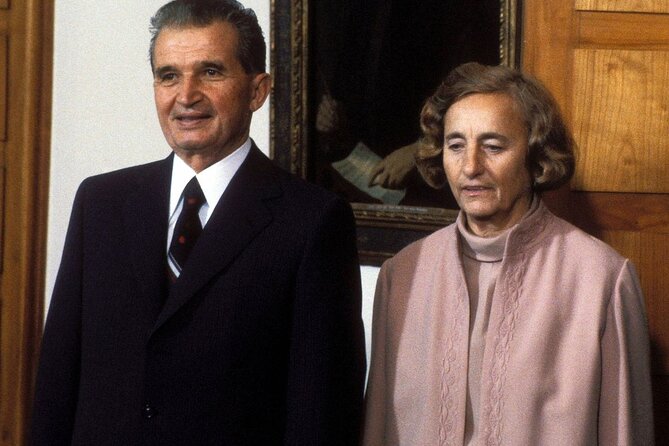
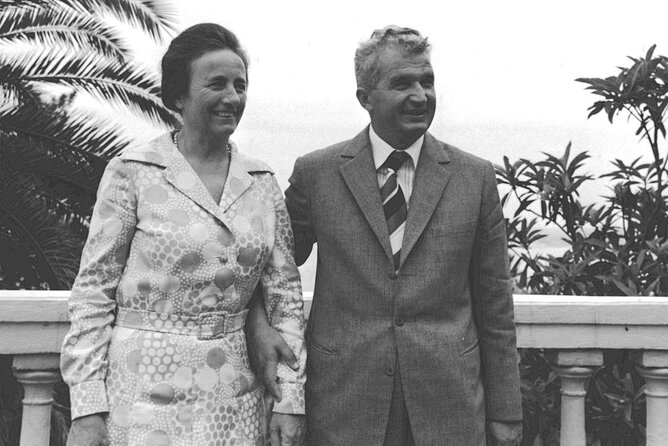
Romania’s communist period is easy to reduce to a few names and dates. Nicolae Ceaușescu ruled from 1965 until 1989, then was tried and executed with his wife, Elena, after the December Revolution. That outline is important, but it does not explain how power looked, felt, and operated in daily life.
This tour gives you several different angles. You see official power in the Palace of Parliament. You visit a public square tied to the uprising. You step into the family home of the ruling couple. Finally, you reach the plain building where the regime’s last hours unfolded.
I like this order because it moves from spectacle to personal privilege to collapse. The day is not just a collection of communist-era buildings. Each stop answers a different question: How did the regime display authority? How did people resist it? How did the ruling family live? What happened when the system broke?
The private format makes a difference here. You are not locked into a large group’s fixed rhythm, and the guide can spend more time on the parts that interest you. If you want more detail on political repression, the Revolution, school life, household goods, or the Ceaușescu family, you can ask as you go.
More History Tours in Bucharest
- Bucharest: 3-Hour Dark History Tour with a Local
★ 4.9 · 301 reviews - Bucharest: Small Group History, Art & Secrets Tour
★ 4.7 · 152 reviews - Guided Walking Tour of Historical Bucharest
★ 5.0 · 84 reviews
The Palace of Parliament: power measured in corridors
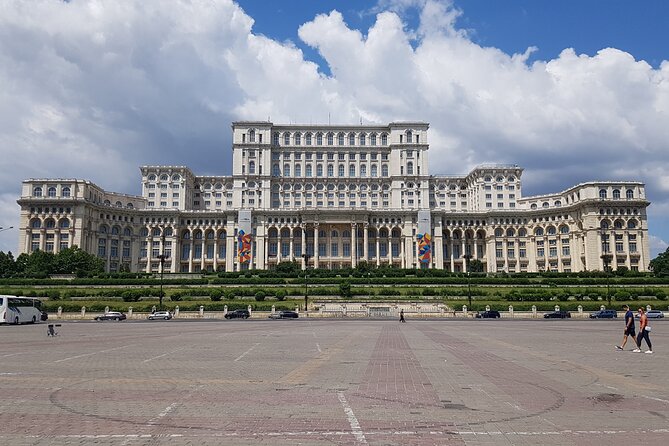
The Palace of Parliament, once called the People’s House, is the day’s most obvious symbol of communist excess. It is described as the second-largest administrative building in the world after the Pentagon, a claim that gives you some idea of its scale before you even enter.
Allow about two hours here. The building is not subtle. Its size, formal interiors, and vast construction project help explain how a totalitarian government could pour national resources into one enormous statement of authority. You are not looking at luxury for private enjoyment alone. You are looking at architecture used as political theater.
The useful lesson is the contrast between the building and the country around it. A regime could create monumental rooms and grand official spaces while ordinary people faced scarcity and strict control. The tour’s wording makes this point directly: the building shows what the sleep of reason and megalomania can produce.
I would treat the Palace of Parliament as a lesson in cost as much as a sightseeing stop. Its size can impress you, but the real value is in asking what had to be cleared, spent, and sacrificed to create it. Your guide can help connect the physical building to the wider damage caused by the regime.
Admission is not included in the tour price. That matters because the advertised $283.10 per person covers the private vehicle, guide-driver, fuel, parking, and road tolls, but not entry tickets. Confirm the current ticket cost when booking so the final total does not surprise you.
Piața Revoluției and the December 1989 uprising
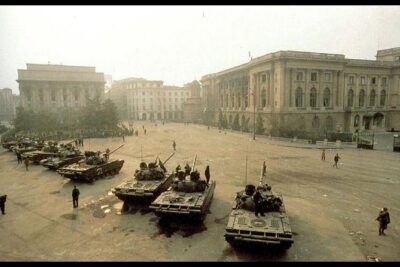
After the Palace of Parliament, the tour turns to Piața Revoluției, one of the key places associated with Romania’s Revolution in December 1989. Allow about one hour, with no admission fee for this stop.
A public square can seem less dramatic than a palace or a museum. Here, its importance is historical rather than decorative. This is where you can place the events of 1989 in the center of Bucharest, where public protest, political authority, and sudden change came together.
I find this stop useful because it gives the day a human scale. The Palace of Parliament represents the regime from above. Piața Revoluției helps you think about what happened when people challenged that authority in public.
Ask your guide to explain the sequence of events connected with the square. The supplied information does not provide a full list of monuments or exact speaking locations, so your best experience will depend on the guide’s explanation. Razvan is specifically praised for offering extensive information at important Bucharest sites, making this a good place to ask direct questions.
There is no entry fee here, but the stop still earns its hour. It helps keep the tour from becoming only an examination of Ceaușescu’s possessions and final days. You are reminded that the end of communism was also a public revolt.
Inside Ceaușescu Mansion and the Spring Palace
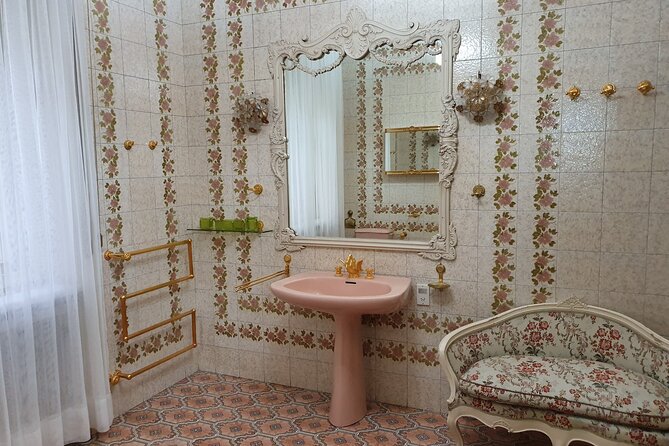
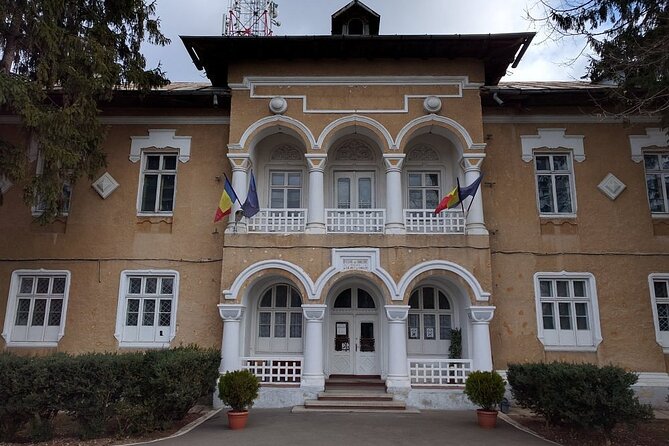
The Ceaușescu Mansion offers the most personal stop on the route. Nicolae and Elena Ceaușescu lived here with their children, Nicu, Zoia, and Valentin, for roughly a quarter of a century, from 1965 to 1989.
The home was built in the mid-1960s and enlarged between 1970 and 1972. It was known at the time as the Spring Palace. Aron Grimberg-Solari designed the residence, while architect Robert Woll worked on the furnishings and the gardens, with Teodosiu handling the outdoor design.
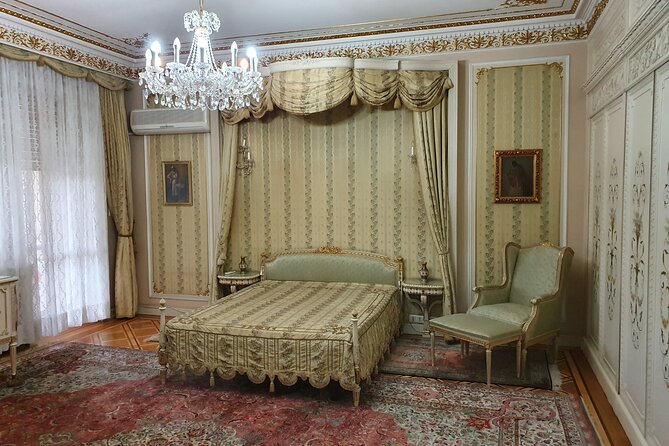
Plan on about two hours, and expect an admission fee separate from the tour. The mansion helps you see the difference between public communist messaging and private life at the top of the system. The building was not simply an office or ceremonial hall. It was a family residence, arranged around comfort and privacy while the wider country was governed through austerity and control.
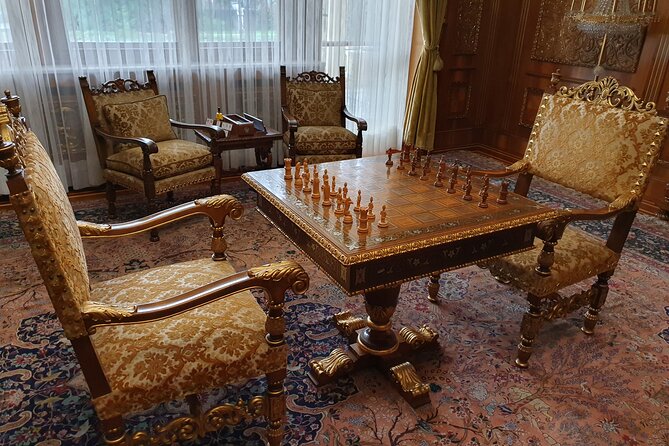
The details are especially useful. You can encounter furnishings, radios, records, televisions, tables, chairs, and kitchen appliances connected with the communist period. These objects may look ordinary, but they show how daily life was organized and what material goods meant in Romania at the time.
You can also learn about children’s education under the regime through displayed material concerning communist-era schools. That broadens the visit beyond the ruling couple. It lets you consider how the state shaped family life, schooling, information, and expectations from childhood onward.
I would not expect the mansion to answer every question about Romanian society. It shows the world of one powerful family, not the home of an average Romanian household. That is precisely why it works best alongside the other stops. The mansion gives you privilege; the Museum of Communism gives you the final, cramped setting of the regime’s fall.
More communism history tours:
- The Real tour of Communism
★ 5.0 · 666 reviews - Life under Communism
★ 5.0 · 358 reviews - 3-Hour Guided Tour of Communist Bucharest
★ 4.9 · 303 reviews - Bucharest Essential Tour: Old Town, Calea Victoriei & Communism
★ 5.0 · 142 reviews
The Museum of Communism and the final trial
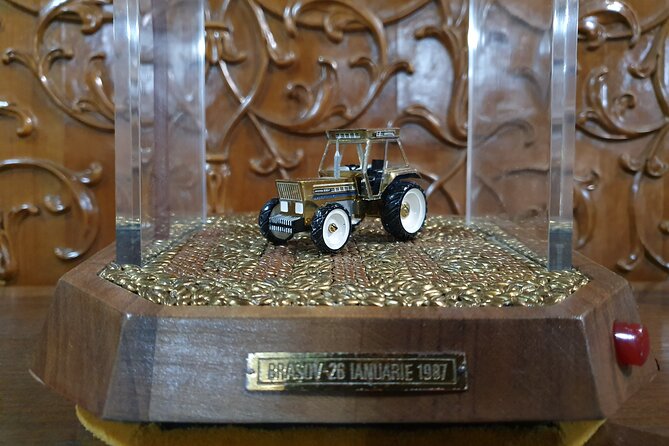
The most sobering part of the day is the Museum of Communism in Târgoviște. This is the building where Nicolae and Elena Ceaușescu were tried and executed. The site is old and poorly maintained outside the trial area, which may feel disappointing at first, but the plain condition also avoids turning the event into a polished attraction.
Entry was 8 Romanian lei, with an extra charge for photography. Since prices can change, treat that figure as a guide rather than a guarantee. Bring some local currency or confirm payment arrangements before the visit.
The rooms are small. That is one of the site’s strongest details because the setting feels modest and cramped compared with the huge Palace of Parliament. You can see the room used for the medical check before the trial, the tables and chairs for the defense, prosecutors, and guards, and the two chairs where the Ceaușescus sat.
There is also a room with the beds where they ate and slept. These spaces show how quickly the powerful couple moved from a heavily protected residence to an improvised military setting. The furniture and plain rooms do not glamorize them, and there are few photographs. The site feels more like a preserved record of an event than a carefully staged memorial.
Outside, you can see the area where the couple was positioned and killed with automatic weapons. Trees now grow there, although they were not present at the time of the execution. That small change is worth noticing. It reminds you that places alter quietly, even when the event tied to them remains fixed in national memory.
This stop is not for everyone. The execution site is direct and unsettling, and the building’s poor upkeep may frustrate you if you expect a polished museum. I think its value lies in the lack of polish. The rooms are ordinary, and that makes the collapse of the regime feel less like a dramatic film scene and more like a grim military procedure.
What your private guide adds to the day
The tour includes a licensed English-speaking guide-driver who remains available throughout the experience. You travel by private car or minibus reserved for your own friends or family, with fuel, parking, and road tolls covered.
That arrangement is important because this is a long day, lasting about nine to ten hours. The stops themselves account for several hours, and the route includes travel beyond central Bucharest to Târgoviște. A private vehicle saves you from piecing together public transportation between sites and gives you somewhere to sit between emotionally heavy visits.
The flexible schedule is another strong point. You can request changes even after the tour begins. That does not mean every change will be possible, but it gives you more control than a fixed group excursion. You might want extra time at the mansion, a shorter stop at one location, or more discussion about the Revolution. Tell the guide early so the day remains realistic.
Razvan is named as a guide who provided extensive explanations while visiting key places in Bucharest and Târgoviște. At the Museum of Communism, a young man is also described as a walking historian of Romania’s communist period. You can ask him about clothing, household objects, school life, news articles, and other displays.
Those personal explanations are central to the tour’s value. Buildings alone cannot explain why the period still matters to Romanians. A guide can connect a radio, a school display, a cramped bedroom, or a public square to larger questions about censorship, scarcity, privilege, and fear.
Price, timing, and what you actually receive
At $283.10 per person, this is not a budget tour. The price is easier to justify for a small family or group of friends because the vehicle and guide are private rather than shared. Group discounts are offered, so ask about the rate if several people are booking together.
You are paying for more than transportation. The package includes a private car or minibus, an English-speaking licensed guide-driver, fuel, parking, and road tolls. It also includes the ability to adjust the schedule, which can be valuable on a day with four substantial historical stops.
Still, entrance fees are excluded. The Palace of Parliament and Ceaușescu Mansion both list admission as extra, and the Museum of Communism also charges entry, with photography costing more. Add those costs before comparing this experience with a cheaper shared tour.
The nine-to-ten-hour length is a good fit if you want a full history day rather than a quick city introduction. It is not ideal if you prefer a relaxed morning with plenty of unplanned time. The subject matter also requires attention. You will spend much of the day listening, asking questions, and processing difficult material.
The tour is offered in English, and confirmation is provided at booking. Pickup is available, with instructions to wait in your accommodation lobby or on the sidewalk if the pickup address is a street location. It is near public transportation, although the private pickup means you do not need to navigate the city to begin.
Free cancellation is available up to 24 hours before the start time for a full refund. Cancellations or changes made less than 24 hours ahead are not accepted, so keep that deadline in mind.
Who will get the most from this experience
I would choose this tour if you want the political story behind Bucharest, not only its churches, cafes, and grand boulevards. It suits anyone interested in twentieth-century European history, authoritarian government, the Cold War, or the personal world of Romania’s former ruling family.
It also works well for families with older children or teenagers who are ready for serious history. The household objects at the mansion and museum can make the period easier to understand than a lecture alone. Younger children may find the execution site upsetting, and the tour does not appear designed as a light sightseeing outing.
The private format is useful for people who want to ask many questions. If you already know the basic story of Ceaușescu, ask about daily life, communist schools, shortages, media, or the difference between official claims and private reality. If you know little about the subject, ask the guide to explain the chronology before reaching Târgoviște.
I would not book it if you only want famous photo stops. The Palace of Parliament offers grand interiors, but the most important parts of the day are reflective and sometimes bleak. You should be comfortable spending time in small rooms and discussing a violent end to a dictatorship.
Should you book this private communist history tour?
Book it if you want a serious, well-connected look at Romania’s communist era and value having a guide and vehicle reserved for your group. The strongest feature is the range of places: a monumental government building, a Revolution site, a private mansion, and the exact setting of the Ceaușescus’ trial and execution.
The price makes the most sense when shared with family or friends, especially if the group discount applies. Before paying, confirm the current entrance fees, photography charge, pickup details, and the exact plan for the Târgoviște portion.
If you want the most useful day possible, go prepared with questions. Ask Razvan about the Revolution, ask at the mansion how the family’s private life compared with ordinary households, and ask at the museum about the trial’s setting and the execution area. Those conversations turn a long drive and a set of buildings into a clear account of how power rose, operated, and finally collapsed.
FAQ
How long does the private communist history tour last?
The experience lasts approximately nine to ten hours. The listed visits include about two hours at the Palace of Parliament, one hour at Piața Revoluției, two hours at Ceaușescu Mansion, and two hours at the Museum of Communism, with travel time between locations.
Is transportation included?
Yes. The tour includes a private car or minibus for your group, along with fuel, parking, and road tolls.
Are entrance fees included in the price?
No. Admission fees are not included. The Palace of Parliament and Ceaușescu Mansion require separate entry payments, and the Museum of Communism also charges admission. Photography at the museum has an additional fee.
Is the tour private?
Yes. Only your group participates. The vehicle and licensed English-speaking guide-driver are reserved for you and your friends or family.
Can the itinerary be changed?
The tour offers flexibility for changes to the daily schedule, including changes after the tour has started. Any adjustment still needs to fit the available time and route.
Where does the tour visit the Ceaușescus’ execution site?
The tour goes to the Museum of Communism in Târgoviște. The building contains the room used for the trial, the medical examination room, the sleeping area, and the outdoor area where Nicolae and Elena Ceaușescu were executed.
Just added in Bucharest
- Bucharest: Dealu Mare Winery Private Trip with Wine Tasting★ 4.9 · 6 reviews
- Winery touring & private wine tasting – one day private tour★ 5.0 · 3 reviews
- Village Museum Bucharest Guided Tour★ 5.0 · 6 reviews
- Transylvania Tour: Dracula’s Castle, Peles Palace & Brasov★ 5.0 · 19 reviews
- Transfer Airport Otopeni – Bucharest★ 5.0 · 2 reviews
- Private Transfer Bucharest Otopeni Airport (OTP) to/from Brasov★ 5.0 · 2 reviews
- Bucharest Airport Transfer To Constanta Mamaia★ 5.0 · 3 reviews
- Airport Henri Coanda (Otopeni) to Bucharest – Private Transfer – Driver★ 5.0 · 5 reviews
Communism and Ceausescu Tours, compared.
Bucharest Essential Tour: Old Town, Calea Victoriei & Communism
Read our review →
Communism in Bucharest – Landmarks, Museum & Communist Appetizers
Read our review →
Browse the lists this tour appears in